History of Meissen’s identifying marks
History of Meissen®’s identifying marks
The FIRST
EUROPEAN PORCELAIN MANUFACTORY was founded in 1710. Its principal assets took
the form of formulae and techniques for the manufacture of porcelain, which
were meant to be kept utterly secret. Only very few employees were familiar
with even part of this manufacturing secret, generally known as the arcanum.
But secrets tend to get betrayed: in 1718, the Meissen arcanist Samuel Stöltzel
attempted to use his knowledge to set up a rival to Meissen® in Vienna. This
attempted faking exercise rendered a system of “marking” necessary: this was the
only way of proving the authenticity of a given piece of Meissen Porcelain®.
Several means of identifying porcelain were devised in the years immediately
following the Manufactory’s foundation. It wasn’t until underglaze cobalt blue
was perfected at Meissen in 1720, however, that a forgery-proof system of
marking was found.
It was then a question of deciding on the symbol or sign to be adopted. The
most familiar mark from this period is the monogram of the then Elector Prince
of Saxony and King of Poland, Augustus the Strong, used from about 1720. On 8
November 1722, Johann Melchior Steinbrück, first Inspector at the Manufactory,
proposed using a motif from the Electoral Saxon coat-of-arms. The ensuing
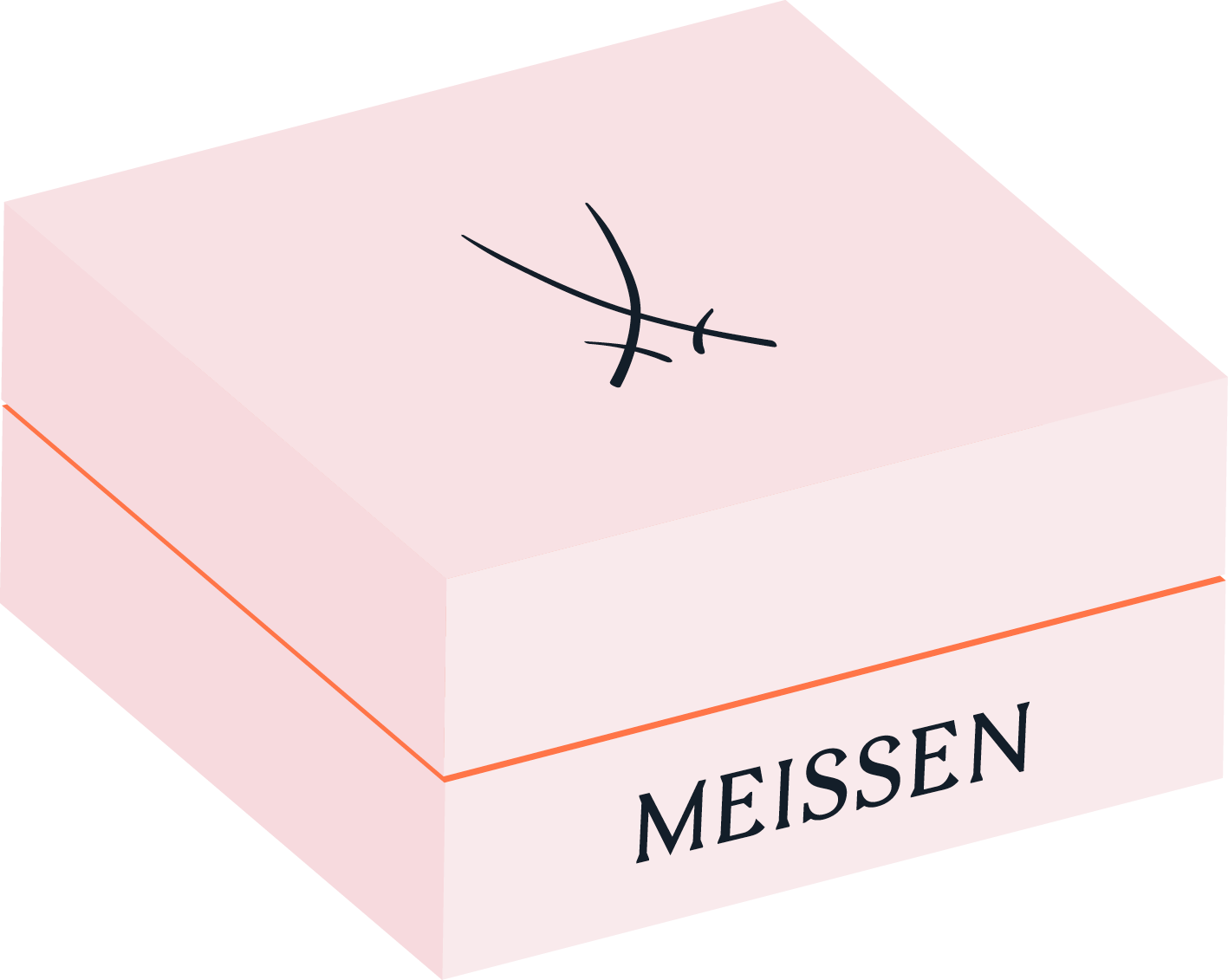
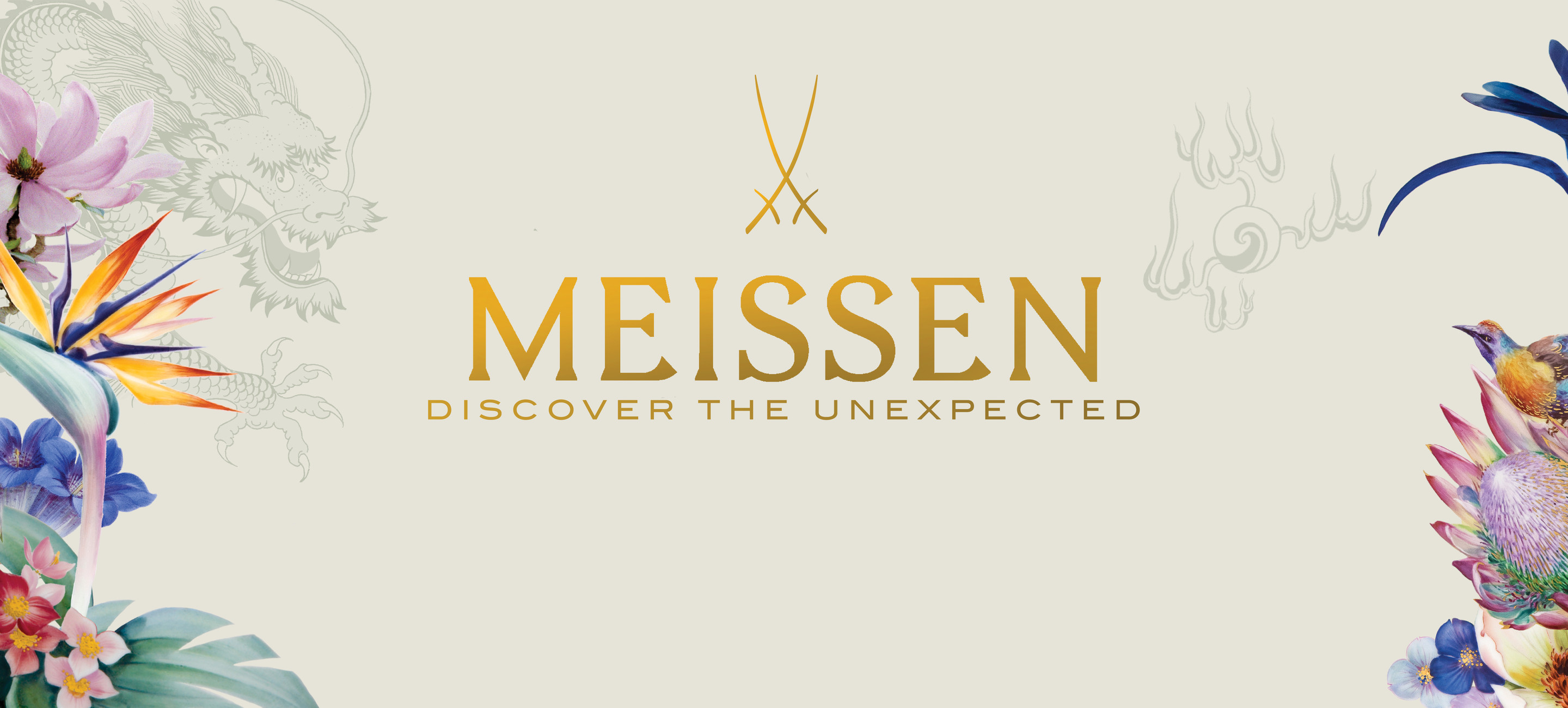
adoption of the “crossed swords” gave rise to a mark whose history and
familiarity throughout the world have remained without parallel ever since.
Sequences of letters continued to be used as alternatives to the “crossed
swords” up to about 1730, examples being:
K.P.M. = Königliche Porzellan-Manufaktur
M.P.M. = Meissener Porzellan-Manufaktur
K.P.F. = Königliche Porzellan-Fabrik.
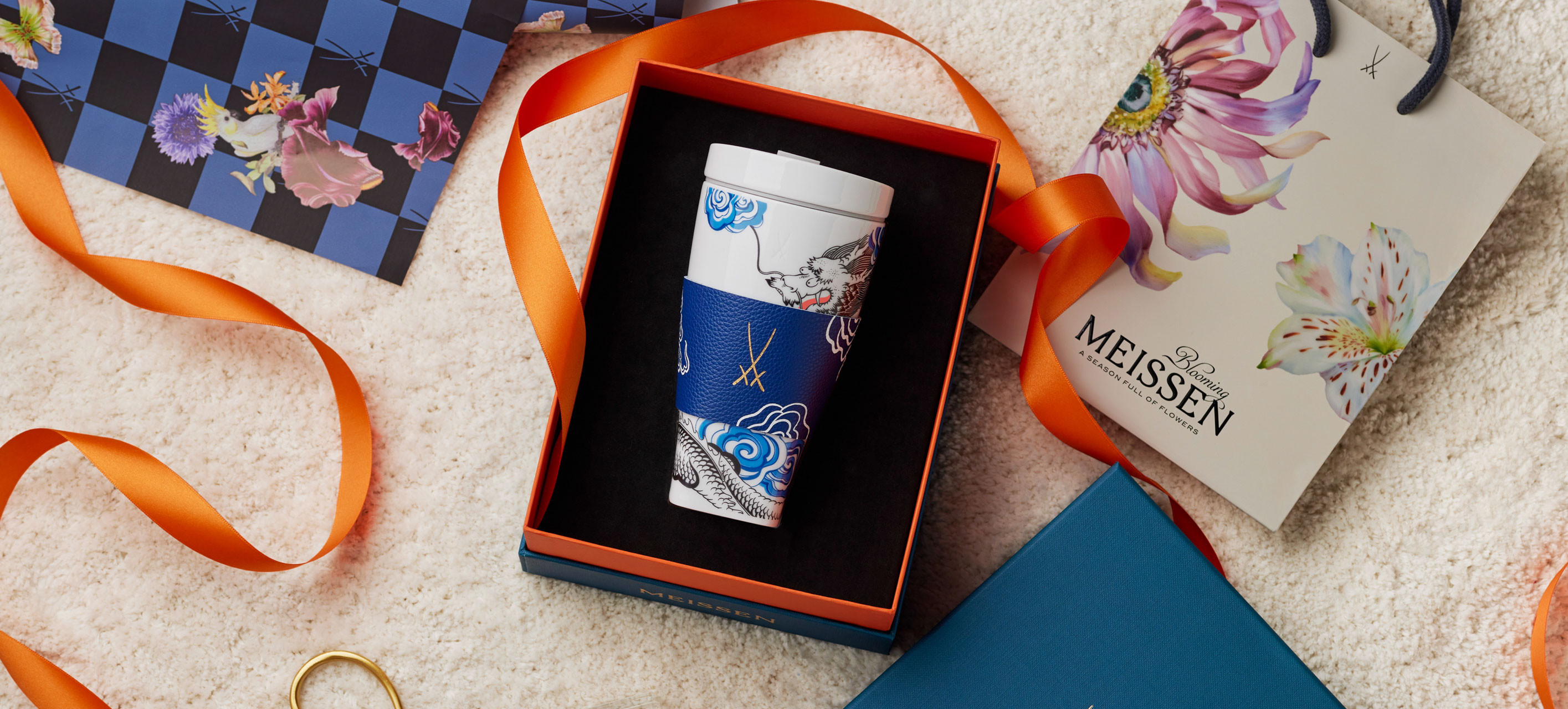
The “crossed swords” mark became the preferred solution for Meissen Porcelain® from about 1731, aided and abetted by orders to this effect from the Royal Court in Dresden. Asterisks, dots, numerals and various other symbols have occasionally been added to the “crossed swords”, though the form of the latter has remained largely unaltered.

The “crossed swords” are still painted on by hand today.