
Christmas Offer from MEISSEN – Enjoy Exclusive Savings! Learn More.
Skip to Content



MEISSEN Patterns
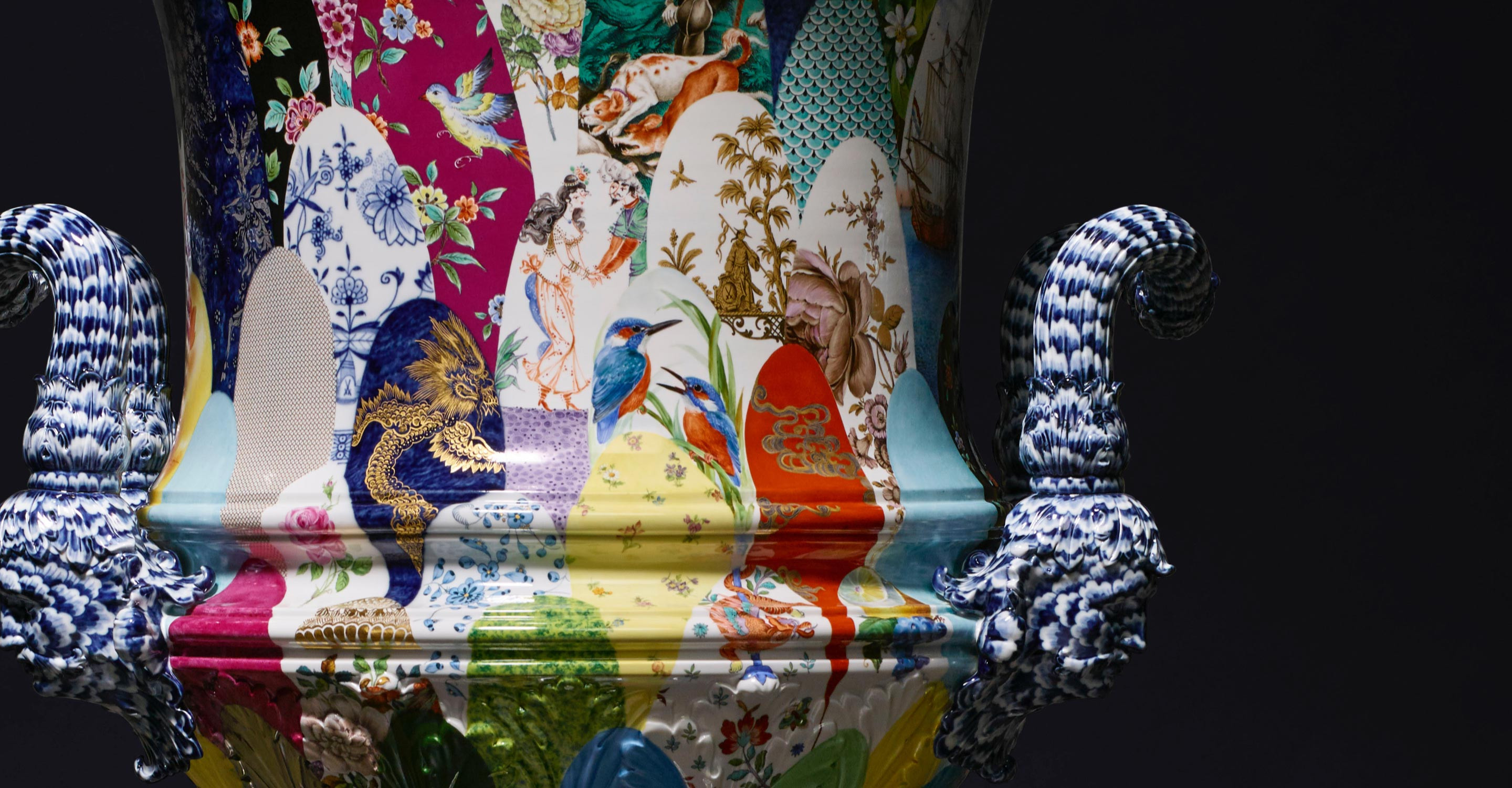
The rich variety of designs and colors that decorate Meissen porcelain is unsurpassed anywhere in the world. From the chinoiserie of Johann Gregorius Höroldt and the nearly 300-year-old “Onion Pattern” or “Ming Dragon” to the delicate blossoms of the Biedermeier-era Manierblumen (“mannered flowers”), all the way to innovative, contemporary creations such as “Noble Blue” – the breadth of Meissen décor embodies the artisanal excellence and design traditions of Europe’s oldest porcelain manufactory over the centuries. To this day, each step of decoration is applied by hand using traditional techniques, relying entirely on proprietary overglaze and underglaze colors made from pigments formulated in the in-house laboratory that was first founded in 1720. In the early days of the laboratory, it was porcelain painter Johann Gregorius Höroldt who advanced the development of colors, creating a base palette of 16 kiln-resistant overglaze colors and a cobalt-blue underglaze that laid the cornerstone for the manufactory’s decorative tradition. During his time, hundreds of decorative motifs were created of such artistic caliber and radiant color that they blazed a trail for all the European porcelain that followed. Today, the standard repertoire of a Meissen porcelain painter comprises around 300 colors – a small portion of the approximately 10,000 paint formulas conserved in the laboratory. The exact formulas are accessible only to a small number of employees, as they are an essential part of the rich legacy of the manufactory.
-
 Mystic MaisonOn form N° 41, an artfully staged masterpiece unfolds – a tribute to the fine arts and to the power of imagination. Majestic mythical creatures such as the winged lion, delicate rocaille elements, and shell-shaped ornaments give the décor an almost mystical aura. Ornamentation and refinement merge into an expression of pure festivity – luxurious, richly detailed, and full of character. Mystic Maison brings magic to the holiday season and is an extraordinary highlight that reinterprets artistic tradition in a new way.
 -
 The OriginalFor The Original collection, the iconic Onion Pattern blossoms in a decorative variation of exceptional splendor. This legendary original, with its cobalt-blue décor, is no longer presented only on the all-time favorite white porcelain, but unfolds on the Urban Colors in a fascinating sensory interplay. The vibrant background colors celadon, yellow, red, rose, blue, and petrol give the iconic décor an urban twist – an impressive statement of modernity. With The Original, a table service has been created that is truly one of a kind. Sensuous and stylish – simply the original.
-
 Urban ColorsThe history of the “Onion Pattern” is rooted in the development of Meissen’s blue painting technique and its particular aesthetic effect on porcelain. Immediately after the founding of the manufactory, the search began for a very special blue – one that would emphasize the white of the porcelain while harmonizing with it at the same time. After extensive series of experiments, the combination of cobalt and oxygen proved to be extremely heat-resistant and ideally suited to porcelain fired at high temperatures. Inspired by East Asian patterns, which were predominantly blue at the time, Meissen’s radiant blue “Onion Pattern” was created around 1731 and would go on to become famous around the world. The pattern does not, in fact, depict onions, but rather peaches and melons along the rim, as well as bamboo stalks and delicate chrysanthemum blossoms in the center.
 -
 Golden BambooThe “Golden Bamboo” décor combines a clear, modern design with symbolism deeply rooted in art history. Inspired by traditional Asian depictions of bamboo, it reinterprets one of the “Four Gentlemen” motifs of classical Chinese painting, which already played a central role during the Song Dynasty (960–1279). Bamboo symbolizes elegance, inner strength, and constancy – values reflected in the delicate gold-colored décor. The design takes up this cultural meaning and translates it into a timeless, reduced visual language that radiates calm, harmony, and clarity. The result is a décor that unites traditional symbolism with modern aesthetics and subtly expresses the idea of value, longevity, and cultural depth.
-
 Onion PatternThe history of the “Onion Pattern” is rooted in the development of Meissen’s blue painting technique and its particular aesthetic effect on porcelain. Immediately after the invention of the first European porcelain and the founding of the manufactory in 1710, the search for a very special blue began – one that would emphasize the unprecedented white of the porcelain while at the same time harmonizing with it. The combination of cobalt and oxygen proved to be extremely heat-resistant and optimally suited to the high firing temperatures used for Meissen porcelain. Inspired by East Asian patterns, which were predominantly blue at the time, Meissen’s radiant blue “Onion Pattern” was created in 1731 and would go on to become famous around the world. The pattern’s “onions” are not in fact onions, but rather peaches and melons lining the rim, bamboo stalks and delicate chrysanthemum blossoms in the middle.
 -
 Strewn FlowersThe “Strewn Flowers” are one of the most beloved decorative motifs of the Meissen manufactory. Created at the start of the 19th century, the design is typical of the Biedermeier era. The impetus was to feature the natural beauty of blossoms and flowers and thus pull away for the first time from archetypal East Asian designs, or “Flowers of the Indies”. As a variant of the “German Flowers” painting style, this Meissen décor exhibits certain unique characteristics. Strewn around a larger central flower are a variety of smaller blossoms, which painters can select from amongst three dozen flower motifs. Each had its own symbolism during the Biedermeier era and was used to express thoughts and sentiments. Painted on the porcelain by hand, the fine detail of the “Strewn Flowers” lends Meissen porcelain a particular vitality and an innate symbolism.
-
 Onion Pattern “Style”In 2004, Meissen’s historic “Onion Pattern” received a contemporary makeover, for which the intricate full-plate pattern was reduced to reveal a chrysanthemum winding along the plate’s rim. The vined bamboo shoot with delicate blossoms and leaves along with the original pattern’s double leaf have remained, while the fruits have disappeared altogether. The new pattern presents itself as a lighter, breezier offshoot of the 1731 original, allowing the porcelain’s luster to shine. On cups, both chrysanthemum and vined bamboo have struck roots in a similarly reduced, less compact artwork – making it seem as though the bamboo were growing straight from the cup. The fruits here have also disappeared, while an “onion” on the saucer harkens back to its historic inspiration.
 -
 Ming DragonDuring the Ming Dynasty, dragons began to appear more frequently on Chinese porcelain. In Chinese mythology, this supernatural creature symbolizes not only the spirit of change, but also the rhythm of nature and existential wisdom. It represents the sun, light, and the male power of yang. Chinese designs also served as the inspiration for Meissen’s “Ming Dragon” motif. The figure of the dragon with four toes, which is the representation typically used at MEISSEN, was originally reserved exclusively for imperial princes in ancient China.
-
 Blue OrchidConstantly reflecting on one’s own rich artistic heritage is deeply rooted in the Meissen tradition. The filigree “Blue Orchid” décor is no exception. It is based on a 1970 design by Professor Heinz Werner: “Blue Orchid on a Branch” is one of the ingenious porcelain painter’s most popular motifs. For “Blue Orchid”, one element of Werner’s original is placed at the center of plates, platters, vases, or saucers, giving the pieces a minimalist feel. The “Blue Orchid” is created using an elaborate underglaze painting technique. The paint is applied directly to the unfired, still porous porcelain, allowing it to absorb the color immediately and making it impossible to correct any errors. The design’s initial appearance, a matte gray, only attains its characteristic cobalt-blue radiance after glazing and the subsequent glaze firing.
-
 Swords“Swords” is a decorative homage to the Meissen manufactory’s historic signet. Since 1722, the trademark has been applied by hand to every piece of Meissen porcelain in the manufactory’s own cobalt blue by appointed “swordsmen” – painters specializing in the Crossed Swords. Although the swords have evolved slightly over the years, they have always remained instantly recognizable. For the first time in the manufactory’s history, its venerated trademark is boldly reinterpreted as a decorative motif in an opulent “Luxury Gold” variant.
-
 Strewn RosesFloral painting on porcelain has a long tradition at the Meissen manufactory that has grown continually throughout the ages and continues on to this day. Amongst its many motifs, it is the “Strewn Flowers” that rank among the manufactory’s most popular and iconic. Created between 1815 and 1845, they are typical of the Biedermeier era. During this period, porcelain painters would use flowers as symbols to express their thoughts and sentiments. As the symbol of everlasting love, roses took on a prominent role amongst all floral motifs. Within the design, a larger central blossom takes center stage and is surrounded by a variety of smaller roses. Painted on porcelain by hand, the fine details of the “Strewn Roses” testify to the masterly craft of Meissen’s porcelain painters.
-
 Trademark MEISSENUpon its founding in 1710, MEISSEN remained the only porcelain manufactory in Europe for nearly a decade. Its most important asset was the formula and techniques required for the manufacture of porcelain. To ensure that these remained confidential, only a few employees were each given a part of the secret. To no avail. From 1718 onwards, a wave of newly founded manufactories required MEISSEN to mark its true originals. In 1722 came the decisive motion, when Johann Melchior Steinbrück, the first inspector of the manufactory, suggested the use of the Crossed Swords from the coat of arms as a fitting trademark. In 1875, the Crossed Swords were registered as the official Meissen trademark, making it the oldest in Europe.
-
 Meissen RoseFloral painting on porcelain has a long tradition at the Meissen manufactory that has grown continually throughout the ages and continues on to this day. Based on the still life paintings of the Old Masters, roses began to appear as a motif in porcelain painting in 1740. Initially in bouquet form, the rose became popular as a single motif in the following Marcolini period. The graceful “MEISSEN Rose” was developed from these paintings in the Biedermeier period. The design corresponds to the particularly evocative still life paintings of flowers in the style of Georg Friedrich Kersting, a Dresden painter who was head of flower painting at MEISSEN at this time. Although hugely influential on the style in this period, there are no designs that have been proven to be solely created by the artist himself.
-
 Indian Flower BranchesApplied to tableware and vases as far back as 1720, “Indian Flower Branches” is one of the oldest decorative motifs of the Meissen manufactory. Modeled after East Asian archetypes of “Indian” painting, the floral motif abounds with symbolism. The lotus flower, a token of purity and enlightenment, occupies a prominent position. The pure, unblemished blossom that rises beaming from out of the mud is a symbol whose metaphorical meaning can just as well apply to Meissen porcelain.
-
 Noble BlueInspired by East Asian porcelain, whose decorations were predominantly blue at the time, the world-famous “Onion Pattern”, the most iconic blue pattern in porcelain history, was created by MEISSEN in 1731. In reference to Chinese originals, the “onions” in the pattern are not in fact onions, but rather peaches and melons lining the rim, bamboo stalks and delicate chrysanthemum blossoms in the middle. With “Noble Blue”, Meissen’s “Onion Pattern” takes new shape to contrast the opulence of the original design with modern lightness. Motif details in bright red and filigree gold finishes complement the color palette of “Noble Blue” and form the perfect contrasting complement to the deep cobalt blue.
-
 Royal BlossomCreated in 1739 at the behest of King August III, the iconic “Snowball Blossoms” are among the most outstanding artistic masterpieces of the Meissen porcelain manufactory. For the first time ever, this venerated décor is reinterpreted in relief as part of “Royal Blossom”.
-
 Boettger StonewareWith “Boettger Stoneware”, MEISSEN honors the legacy of a storied material that played such a fundamental role in the development of Europe’s first porcelains. Both then and now, it is the expressiveness, surface feel, and earthen warmth of that original stoneware that captivates its admirers.
-
 Wild PoppyFloral decorations based on botanical drawings, depicting flowers and blossoms in their natural beauty, are an important genre within Meissen’s varied décor repertoire, dating all the way back to the 18th century. For this, the manufactory’s painters are not only inspired by nature but also channel the artistic style of their time. On-glaze and underglaze paints are employed, often in combination and in a variety of techniques, in order to realize their artistic visions on porcelain. A wonderful example of Meissen’s contemporary designs, “Wild Poppy” is inspired by floral watercolor paintings, capturing the flaming red tones of summer meadows in jaunty brushstrokes. In contrast to its more traditional equivalents, this motif’s beauty lies in its breezy, almost candid composition.