
Christmas Offer from MEISSEN – Enjoy Exclusive Savings! Learn More.
Skip to Content



Cupid in Porcelain
Depictions of Cupid, which portray winged youths in graceful forms—often with arrows, hearts, or playful gestures—portray love as an enduring, elegant form of expression. Since the mid-18th century, Cupid motifs have been an integral part of MEISSEN’s creative portfolio. They combine classical symbolism with artful porcelain design, with fine details and varied ornamentation emphasizing the design aesthetic. Iconic figures sensually convey emotions: from mischievous shyness to passionate intimacy. For MEISSEN, they represent elegance and narrative sophistication. Collaborations, including one with the US brand Supreme, led to the creation of “Cupid with Shirt in MEISSEN Decor Worlds,” based on a 1880 design by sculptor Johann Pollak. Further new designs by Lena Hensel and Matthias Scholz, as well as a special artistic collaboration with Magnus Gjoen, highlight the connection between classical symbolism, modern style, and masterful porcelain design.
-
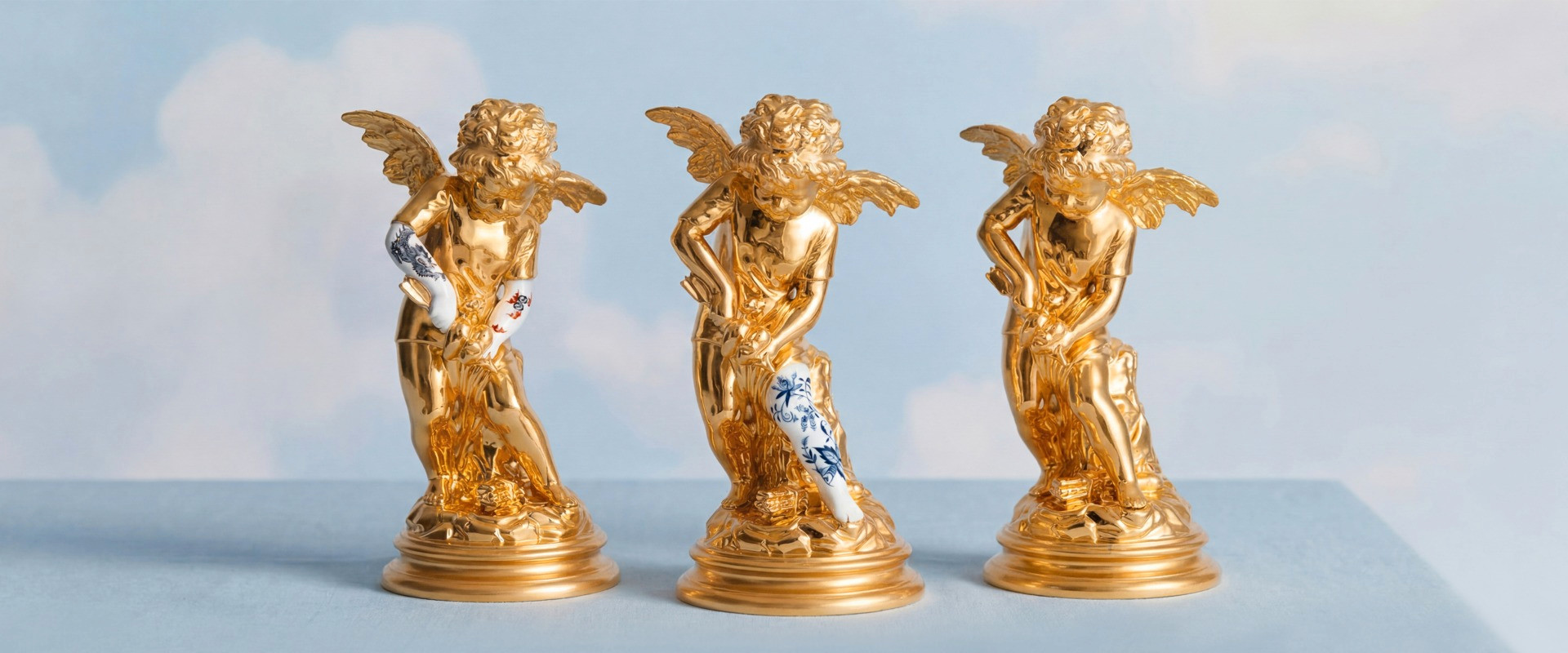
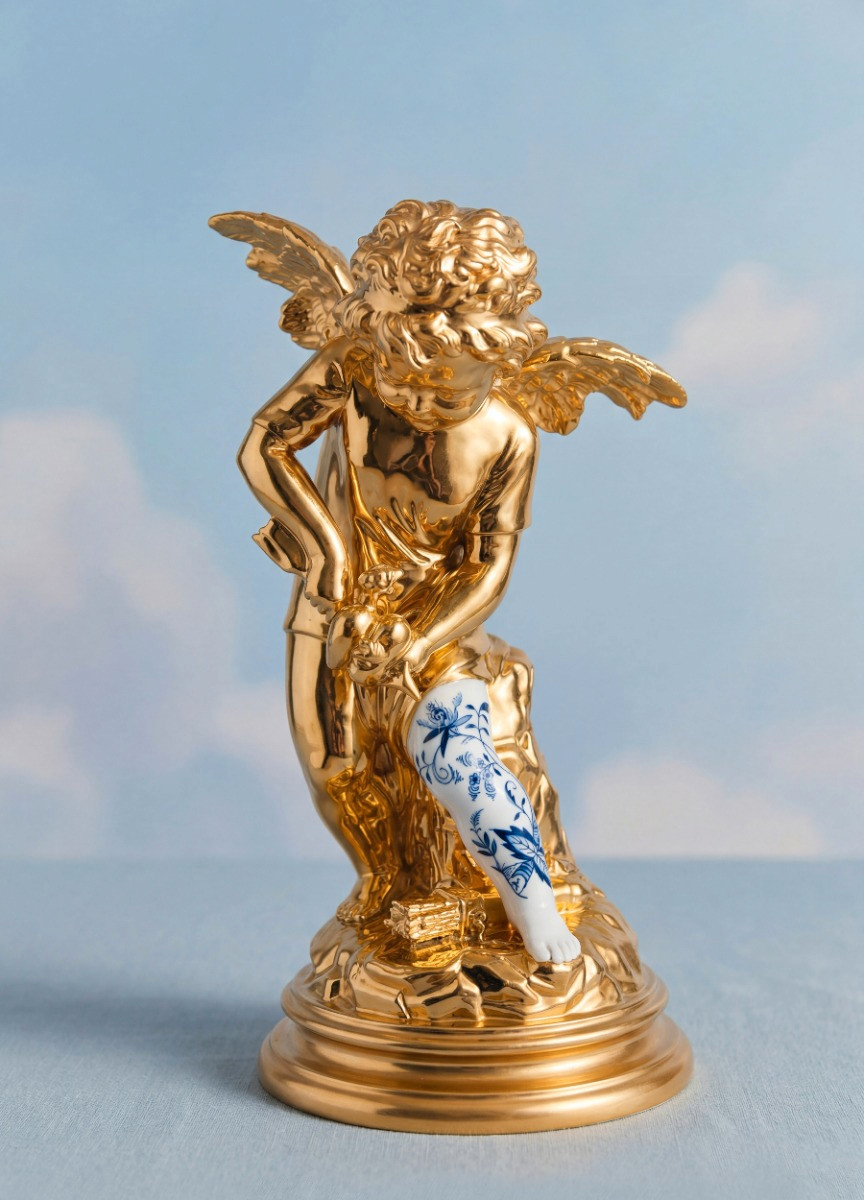 MEISSEN Cupid with a ShirtIn 2025, MEISSEN expanded its iconic Cupid series with three fully gold-gilded versions of the “Cupid with Shirt.” Each figurine is meticulously handcrafted and finished with approximately 2 grams of genuine 25-karat gold, giving it a particularly radiant and expressive presence. Two of the three Cupid figures are additionally adorned with filigree decorative elements featuring the onion pattern and Ming dragon motifs, which resemble tattoos in appearance and translate the manufactory’s historical icons into a design-oriented language.
The Amor figures in the Gold Edition combine the finest porcelain craftsmanship with contemporary, stylish design, making them extraordinary, exclusive works of art. They embody artisanal precision, luxurious finishes, and an iconic design language with unmistakable recognition value—qualities that have defined MEISSEN for centuries.
-
 The creative impetus for this development came from the highly acclaimed collaboration with the US label Supreme in 2019. For this project, the “Cupid with Shirt” was adorned with the iconic Supreme logo for the first time and released as a strictly limited edition of just 100 pieces. The entire run sold out within an hour, marking the beginning of today’s contemporary Cupid series, which continues to evolve.
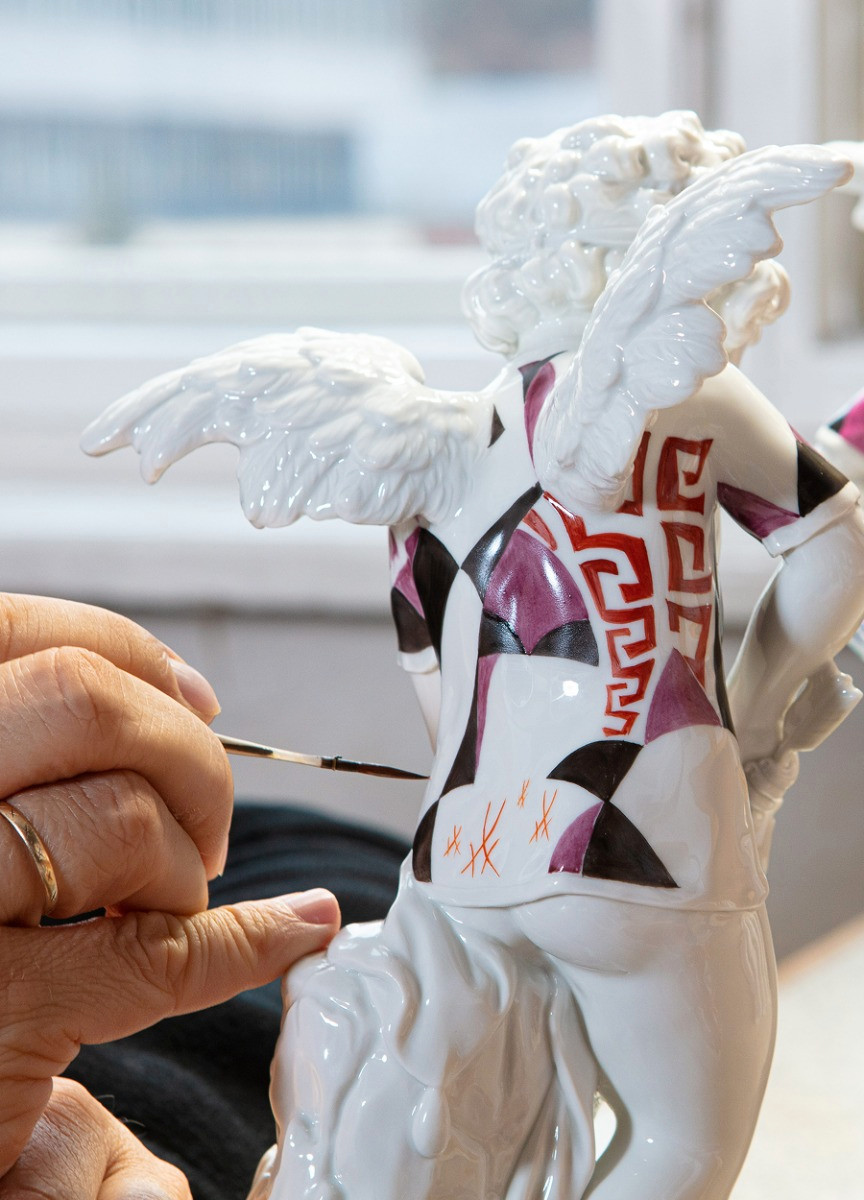
The figure is based on a sculpture from 1880 designed by the sculptor Johann Pollak. For this contemporary reissue, the original figure has been dressed in a distinctive T-shirt. The “MEISSEN Dekorwelten” motif is a modern interpretation of historical designs for the eye-catching T-shirt design, featuring iconic motifs spanning more than three centuries of the manufactory’s history. Masterfully hand-painted by Matthias Scholz, the figure gains its unique expressiveness.
-
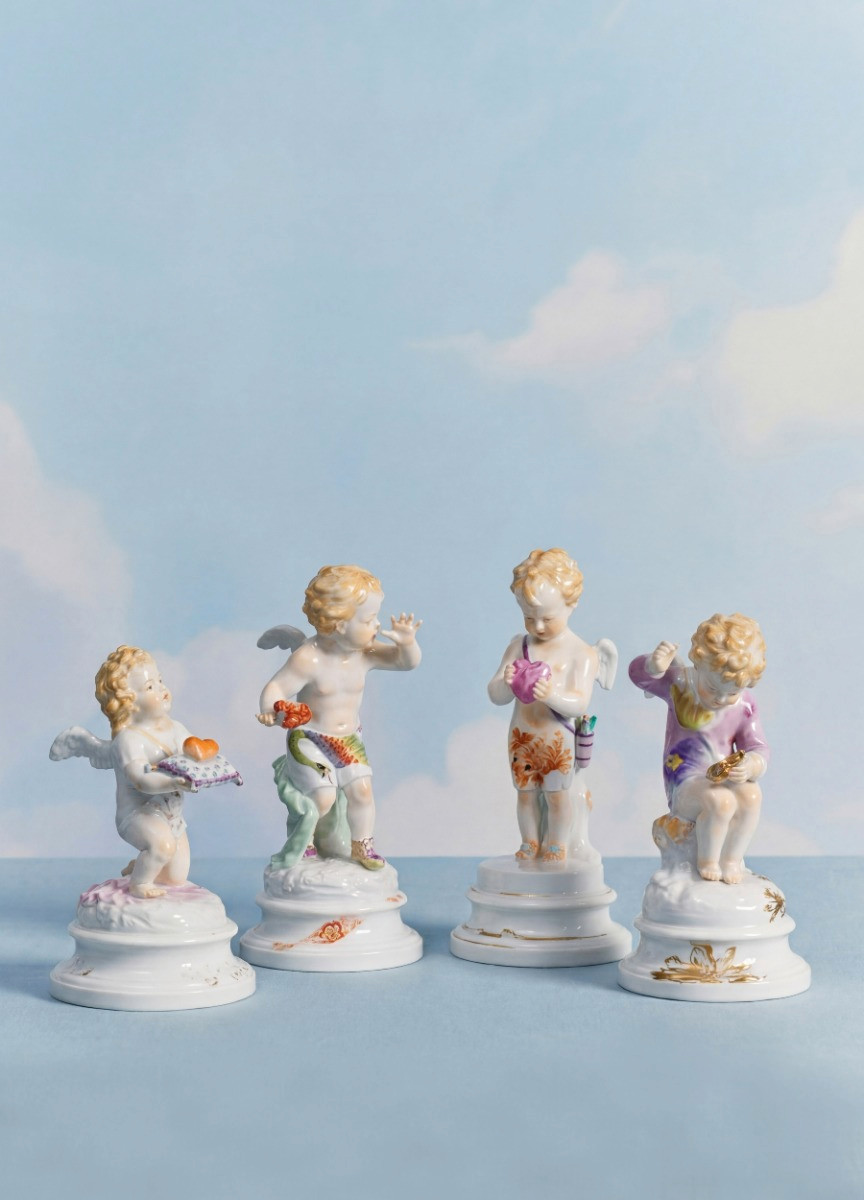 New creative dimensionsThrough her Cupid figures, designer Lena Hensel expresses her creative vision in a distinctive way. One Cupid features the face of a musician from the world-famous Affenkapelle on his shirt, while another is hand-painted with the modern floral motif “Giant Bloom.” For the shorts of two other Cupid figures, Lena Hensel interprets a fish and a crane with particular sensitivity.
In this way, the extraordinary diversity that MEISSEN is known for to this day finds a new, distinctive form of expression. Each individual figurine is decorated with masterful precision and, through hand-painted porcelain, takes on its very own artistic signature.
-
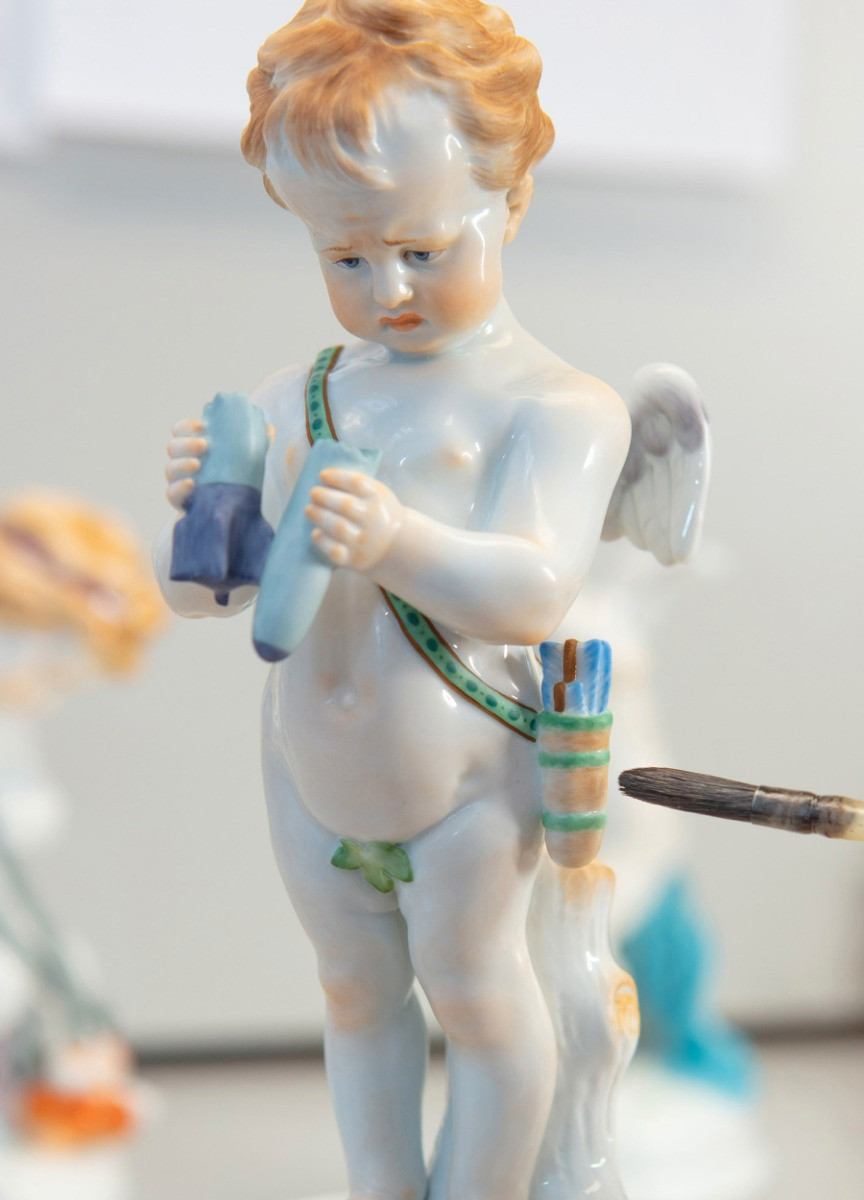 MEISSEN x Magnus Gjoen - “Peace” Amor FiguresThe collaboration between the MEISSEN porcelain manufactory and the Norwegian-British artist Magnus Gjoen combines the finest porcelain craftsmanship with experimental, pop-culture-inspired art. Gjoen blends graphic design with humorous and often ironic elements, reimagining classic cupids in new contexts—featuring Pop Art motifs, graphic patterns, and contemporary objects. In this way, the series opens up surprising creative perspectives.
In a limited edition of 50 pieces each, the collaboration presents the “Peace” collection, featuring three unique Amor figures.
-
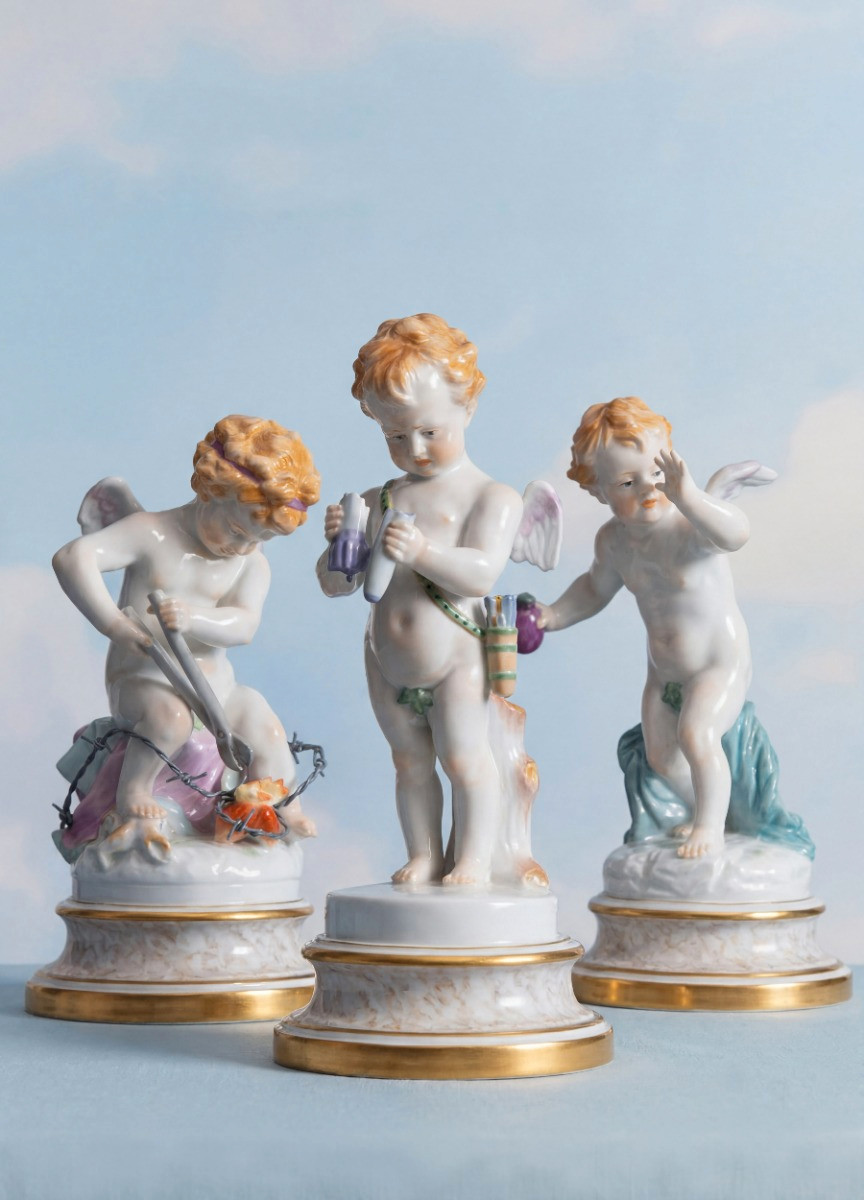 Love Always Wins
Cupid’s love is a heavenly power. Between 1877 and 1880, Heinrich Schwabe endowed the famous messenger of love with human traits in a humorous, almost bourgeois manner—as a tailor, he mends a heart; as a blacksmith, he kindles the fire of love. In the Magnus Gjoens edition, however, Cupid throws a grenade—one of love rather than destruction—to spread hope and end conflicts.
The little Cupid cuts through barbed wire: an act of love that overcomes hatred, separation, and boundaries. Exquisite porcelain meets rustic barbed wire elements, creating a powerful symbol of the tension between tenderness and harshness, vulnerability and defense. The work explores the contrasts between love and hate and asks which force ultimately prevails.
Love Not War
Cupid looks at a rocket he has broken so that it can no longer cause any harm. The figure stands as a powerful symbol of love’s victory over violence. This is an important message, especially in turbulent times.
Kampagnen
-
01
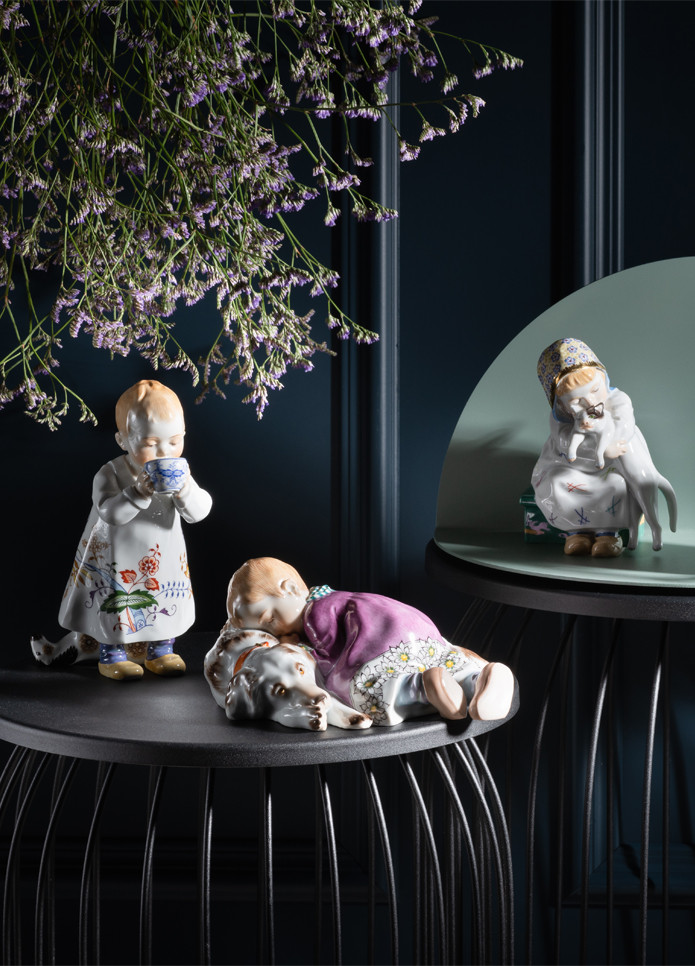 Hentschel ChildrenIndividually and vividly designed, the Hentschel Children mark a turning point in Meissen's small sculptures at the beginning of the 20th century.
 -
02
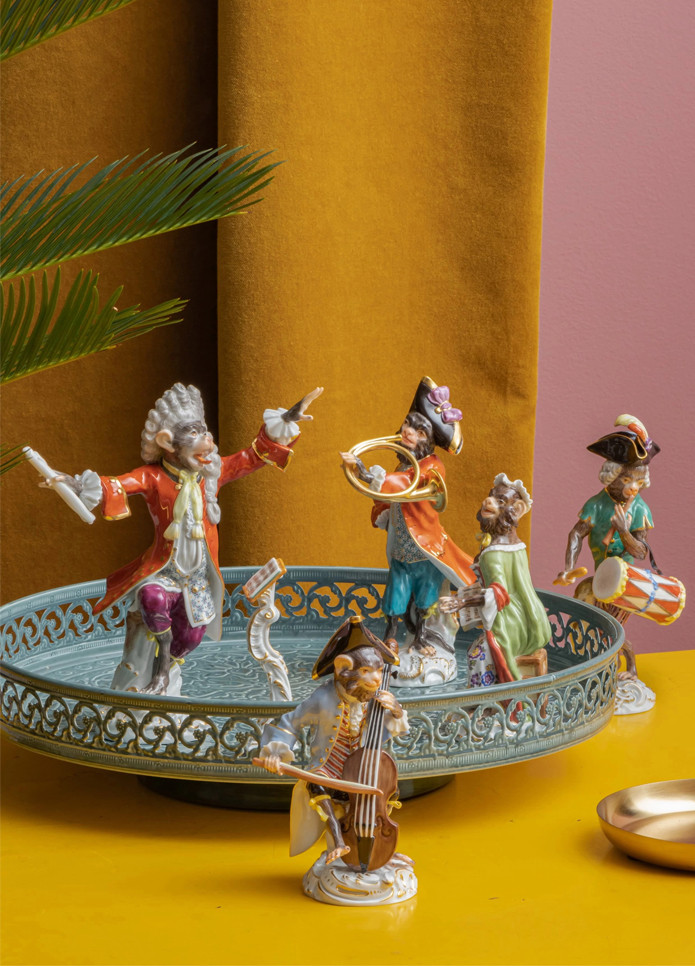 Monkey OrchestraThe Monkey Orchestra is a series of detailed painted monkey figures in the rococo style. Drawings by the French singerie painter Christophe Huet served as a model.