

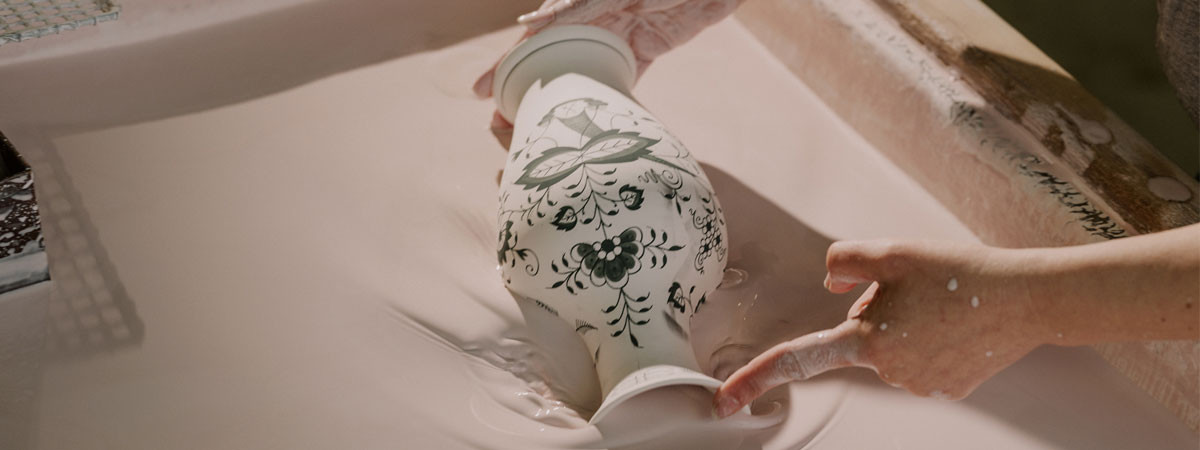
Color Laboratory
Around 10,000 Color Formulas

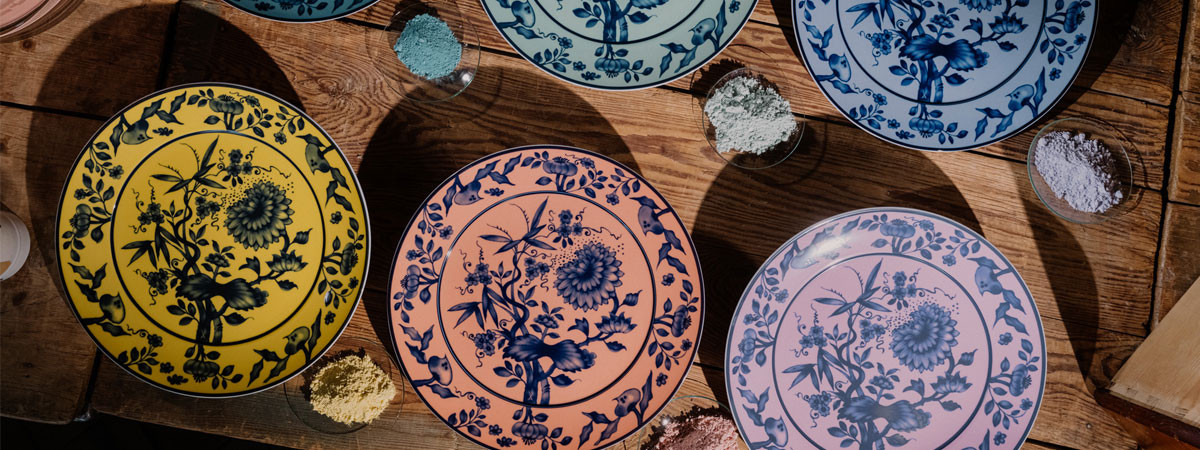
As early as 1725, Johann Gregorius Höroldt succeeded in developing a basic palette of 16 fire-resistant overglaze colors that revolutionized the artistic decoration of porcelain. Since then, the color palette has been continuously expanded: today, the Meissen color archive contains around 10,000 carefully preserved color formulas that have been handed down through the centuries and are continually maintained.
The colors are produced in the manufactory’s in-house color laboratory, where traditional methods meet modern technical expertise. Among the approximately 300 most frequently used overglaze colors are, for example, 42 shades of purple, 17 shades of green, 12 shades of red, and 25 shades of yellow, with almost unlimited gradations. This allows the artists to tailor every nuance individually to each figurine or piece of tableware.
Gloss Gold and Polished Gold

In addition to classic porcelain colors, gold preparations are also used and are divided into two groups: gloss gold and polished gold. Gloss gold, invented in 1827 by Heinrich Gottlob Kühn, already has its characteristic gleaming shimmer after the decoration firing. Polished gold, by contrast, leaves the kiln matte and achieves its velvety appearance only through careful polishing afterward.
Thanks to the extensive color archive and the meticulous work carried out in the color laboratory, even the finest nuances, shimmering highlights, and subtly graduated color transitions can be realized on porcelain. The result is colors and decorations that unite traditional craftsmanship, artistic originality, and the highest level of precision in every single piece.
Underglaze Painting

Applied to the body before the second firing, underglaze colors fuse with the porcelain at temperatures of up to 1,400 °C. Only a few colorants—such as the metal oxide cobalt—can withstand the heat.
Discover nowOverglaze Painting

On glazed porcelain, this painting technique reveals its full brilliance only after the subsequent color firing. The painters each specialize in specific areas of the diverse decorative palette.
Discover nowTrademark

As Europe’s first trademark, the Crossed Swords of the Saxon electoral coat of arms have stood for the authenticity and quality of Meissen porcelain since 1722. To this day, the signing is entrusted to specially trained sword mark painters.
Discover now