

Crossed Swords & Trademark
The Crossed Swords are a visible commitment to origin, authenticity, and quality. They unite centuries-old craft tradition with timeless aesthetics and make every piece of Meissen porcelain an unmistakable original.
The Electoral Swords

The Crossed Swords are far more than a trademark—they are the globally recognized symbol of the MEISSEN Porcelain Manufactory and have stood for master craftsmanship, artistic excellence, and the highest quality for more than 300 years.
Their history begins in the early 18th century, when the manufactory introduced a distinctive mark to identify its porcelain. Inspired by the Saxon electoral coat of arms,
the electoral swords became an integral part of every Meissen original and established a brand tradition of unique continuity. This makes the Crossed Blue Swords the oldest trademark in Europe still in uninterrupted use today.
Trademark since 1722

Over the centuries, the execution and details of the swords have changed subtly again and again. These period-specific variations reflect the spirit of their time and allow connoisseurs to date historical Meissen pieces with precision.
To this day, every piece of Meissen porcelain is marked with the swords by hand. The “Crossed Swords” are applied to the raw porcelain body using cobalt-blue underglaze color, after which the corresponding porcelain piece is fired in the kiln. Through this process, the swords lie beneath the glaze, protected from external influences and manipulation.
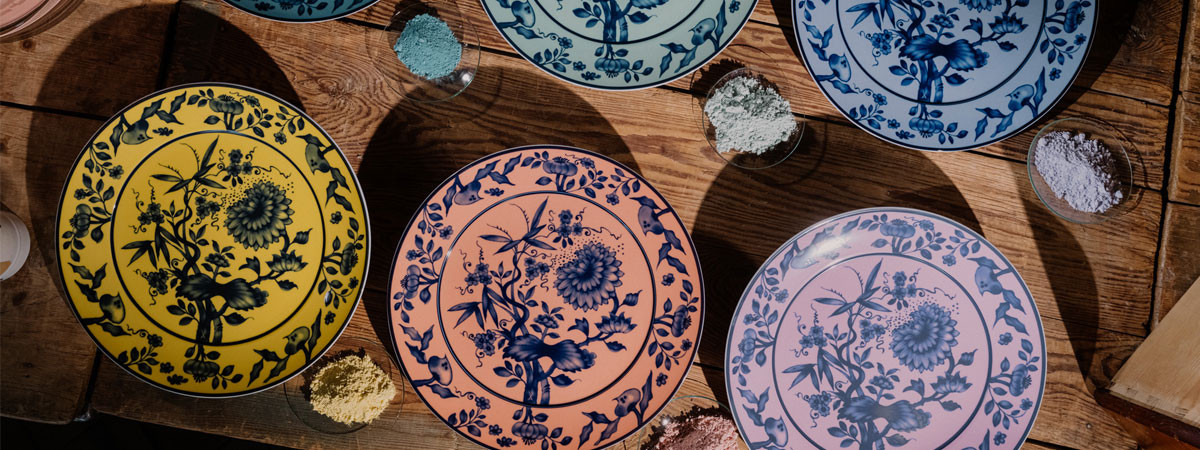
Underglaze Painting

Applied to the body before the second firing, underglaze colors fuse with the porcelain at temperatures of up to 1,400 °C. Only a few colorants—such as the metal oxide cobalt—can withstand the heat.
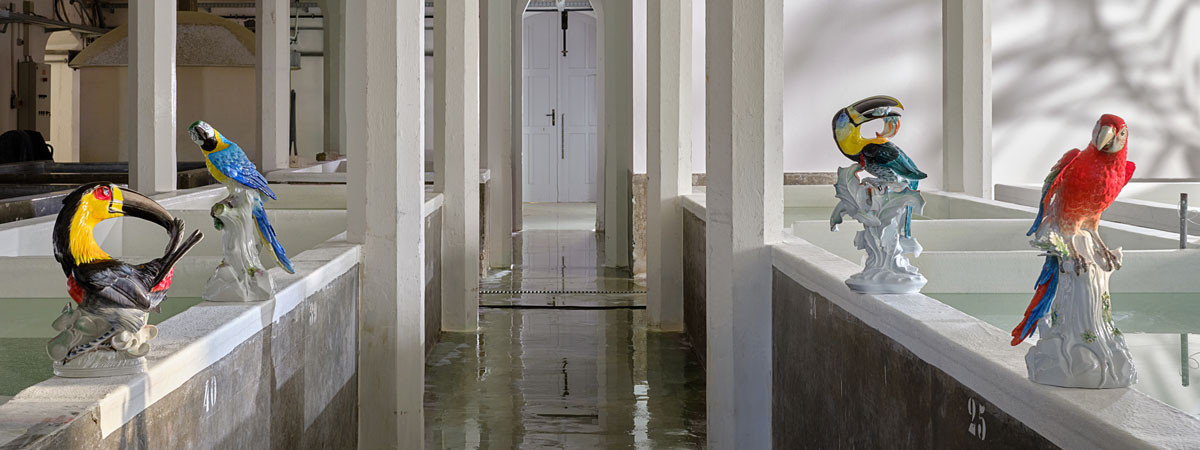
Discover nowOverglaze Painting

On glazed porcelain, this painting technique reveals its full brilliance only after the subsequent color firing. The painters each specialize in specific areas of the diverse decorative palette.
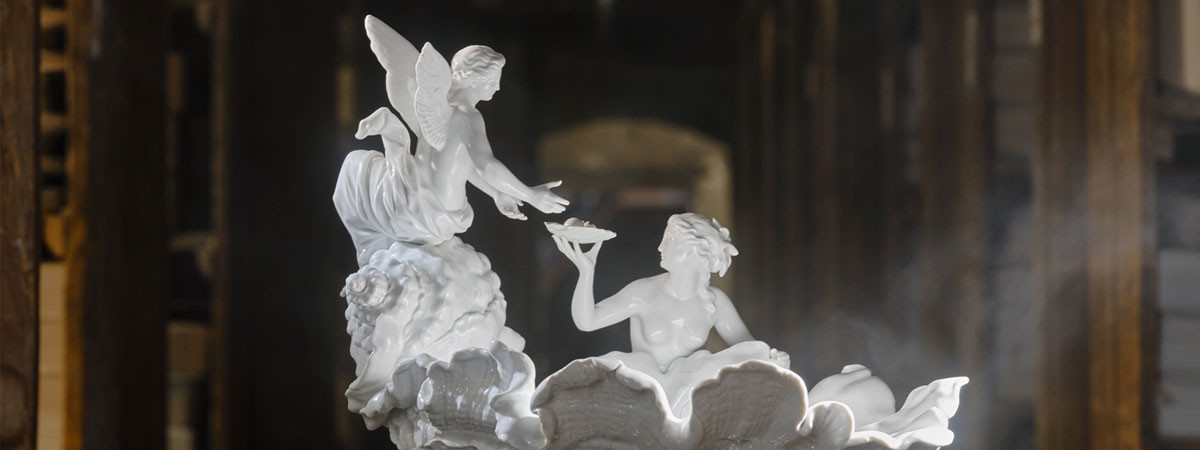
Discover nowForm Archive

The impressive form archive houses around 700,000 plaster molds. These molds provide the basis for reproducing approximately 9,000 figurines and around 15,000 tableware pieces.
Discover now