-
1708The invention of the first European porcelain
In the 17th century, all of Europe is captivated by Chinese porcelain. With its pure white body, remarkable workability, and exquisite decorations, it surpasses all ceramic wares of its time in both quality and refinement. These Asian porcelains are so highly valued that they are even attributed with magical properties: it is believed they would shatter upon contact with poison.
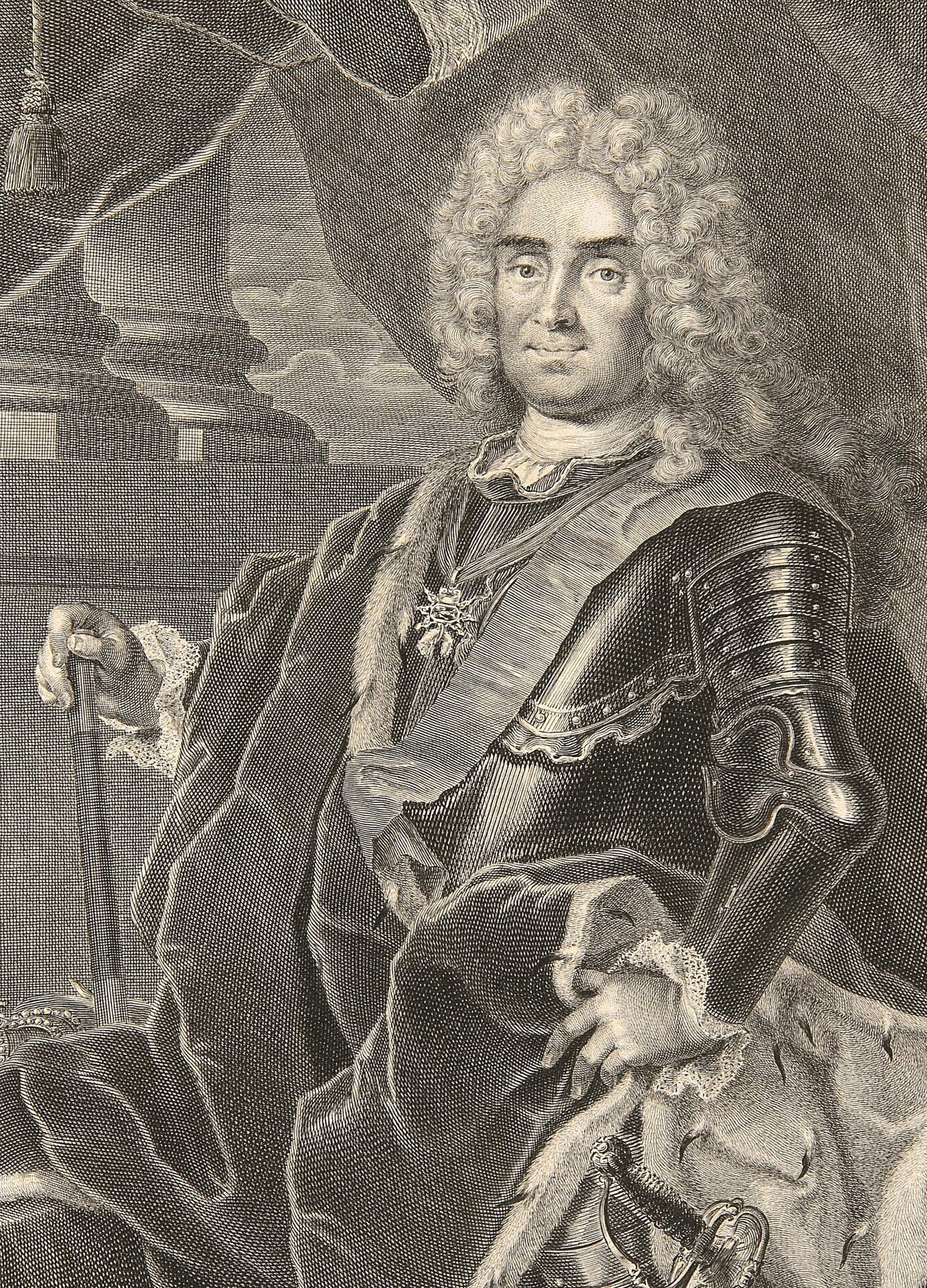
Among the European nobility, a true collecting frenzy emerges, one that particularly grips Augustus the Strong, Elector of Saxony. Driven by what was known as the “maladie de porcelaine,” he spares no effort or expense: works of art made of gold and silver—including treasures of Louis XIV, the Sun King—are melted down in order to acquire precious Eastern porcelain. As a solution to this economic imbalance, Augustus, like many of his contemporaries, turns to alchemists in the hope that they might unlock the secret of transforming base metals into gold.
In 1702, he brings the young alchemist Johann Friedrich Böttger to Dresden, where Böttger conducts experiments for two years without success. After a failed attempt to escape, he is confined to Albrechtsburg Castle in Meissen, where he continues his research under the supervision of the mathematician and physicist Ehrenfried Walther von Tschirnhaus.
The collaboration proves highly fruitful. Together with mining official Gottfried Pabst von Ohain and miners and metallurgists from Freiberg, Böttger systematically studies various material compositions and conducts extensive experiments on the firing behavior of Saxon clays. In November 1707, the first breakthroughs are achieved: Böttger succeeds in producing a red stoneware known as “jasper porcelain,” today referred to as Böttger stoneware.
Just a few weeks later, he also succeeds in producing white porcelain. This required only replacing the fine clay with white kaolin—the final crucial piece of the puzzle. On January 15, 1708, the first firing of European hard porcelain is successfully completed. In the summer, Augustus the Strong personally examines the result: European hard-paste porcelain has been born.
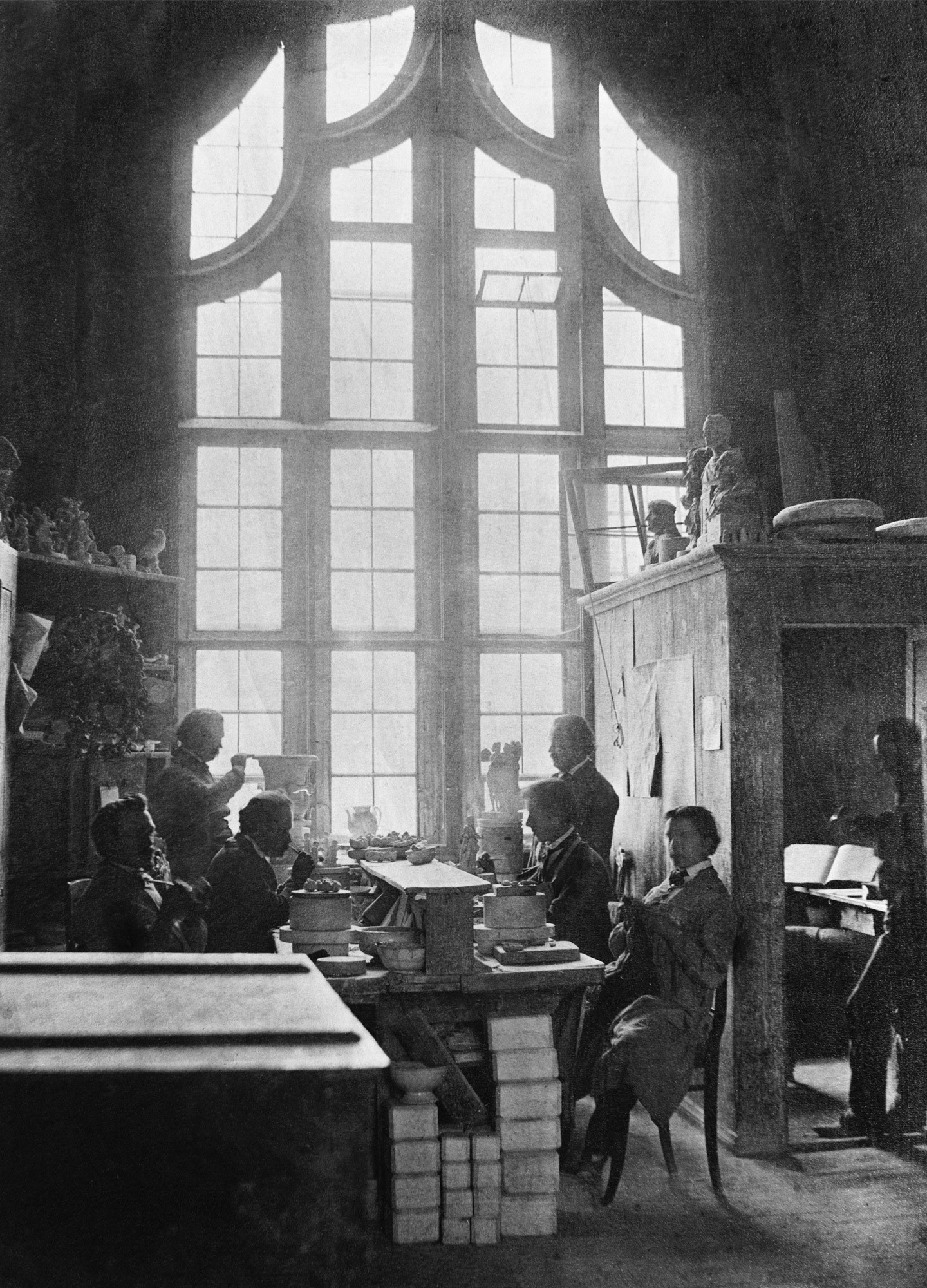
On January 23, 1710, Augustus the Strong founded the Royal-Polish and Electoral-Saxon Porcelain Manufactory, with production beginning on June 6, 1710, at Albrechtsburg Castle in Meissen. For nearly 150 years, the Albrechtsburg served as the production site. There, the “Arcanum”—the strictly guarded secret of porcelain making—was preserved with the utmost care.
However, the knowledge does not remain secret for long, and soon other porcelain manufactories emerge across Europe. In order to protect the exceptional quality of Meissen porcelain and clearly identify its authenticity, the crossed swords derived from the Saxon coat of arms are introduced in 1722. They remain one of the oldest continuously used trademarks in the world to this day.
-
1720Chinoiseries & Blue Onion
At the beginning of the 18th century, Europe is swept up in a true wave of chinoiserie, driven not least by a fascination with Chinese porcelain and the rich pictorial worlds of its decoration. With the meticulous imitation of East Asian forms and ornamental designs, the history of the MEISSEN porcelain manufactory also begins.
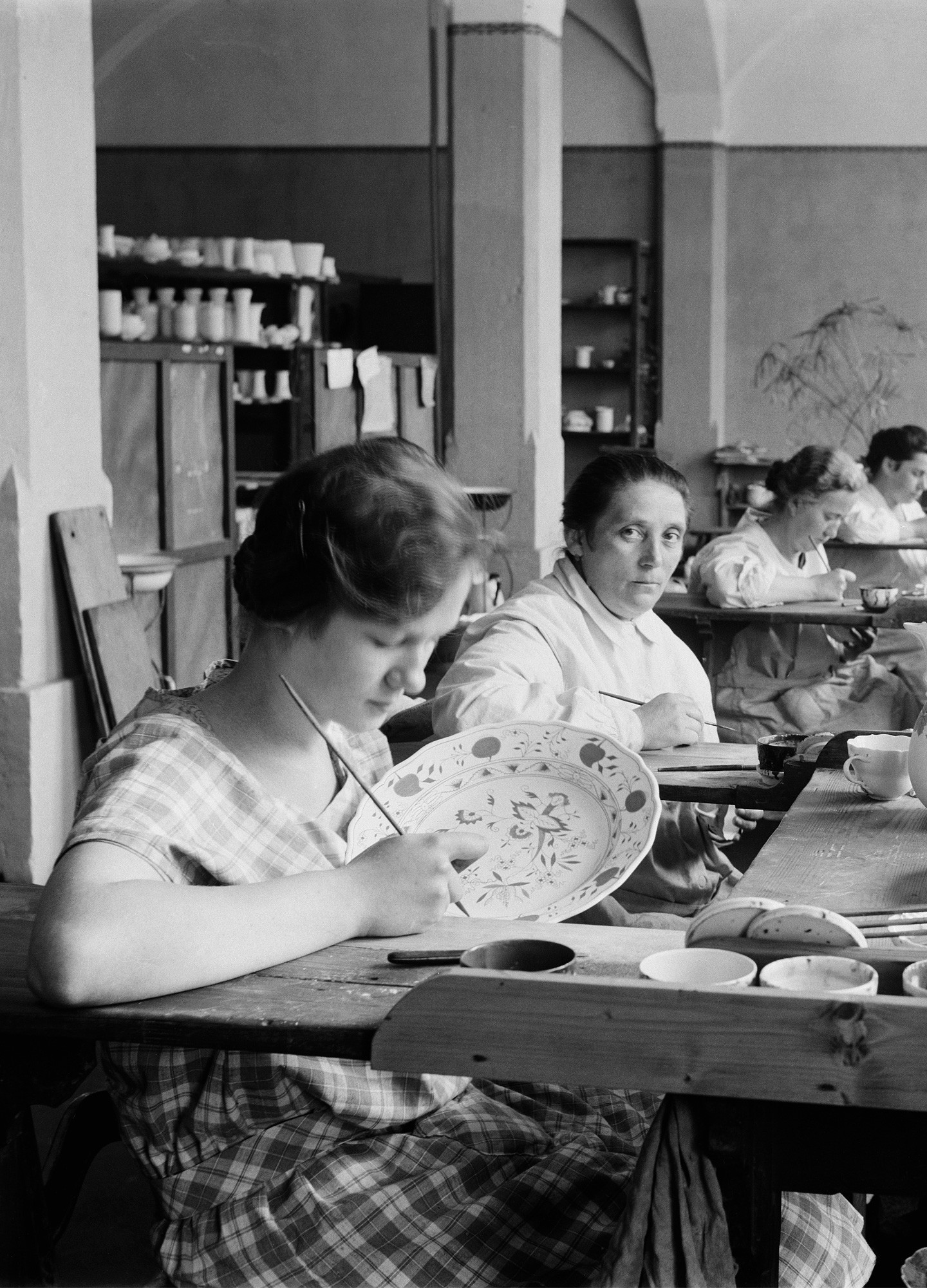
From the 1720s onward, Meissen porcelain clearly reflects this engagement with East Asian models. Designs and shapes of cups and jugs emerge that illustrate a blending of Asian motifs with European traditions. In the process of translating these motifs, misunderstandings also occur. The most famous example is the Meissen “Onion Pattern,” which in fact does not depict onions at all, but rather peaches, melons, pomegranates, and citrus fruits such as stylized oranges.
This early creative period of the manufactory is closely associated with the porcelain painter Johann Gregorius Höroldt, who arrives in Meissen from Vienna in 1720. Under his leadership, the manufactory advances its development of both underglaze and overglaze paints resistant to high firing temperatures, making unprecedentedly vibrant and richly colored decorations possible.
His renowned chinoiseries reflect the European imagination of the 18th century: paradisiacal gardens filled with botanical and animal motifs, courtly scenes, and depictions of Asian life. Höroldt creates decorative styles that become trendsetting for porcelain manufactories across Europe. Outstanding examples include the “Indian Flowers,” the “Old Rich Yellow Lion,” and the “Kakiemon” designs.
-
1722Animal and Hunting Motifs
Around 1722, shortly after its founding, hunting motifs were introduced into the repertoire of the MEISSEN porcelain manufactory. Vases, tableware, and goblets decorated with animals and hunting scenes became part of the inventory of the many hunting lodges of Augustus the Strong.
One of the most important representatives of this genre of pictorial decoration was the porcelain painter Johann Georg Heintze, a pupil of Höroldt. He quickly specialized in parforce hunting scenes, which were transferred onto services and vases based on copper engravings by Johann Elias Ridinger and Georg Philipp Rugendas. Rather than literal reproductions, what was required were imaginative compositions that isolate the main motifs from their original sources and place them into lively, idyllic landscape settings.
From the late 18th century onward, Meissen hunting motifs were defined less by dramatic action scenes and more by a different aesthetic approach: vividly painted wild animals and birds depict creatures in their natural habitats, expressing an idealized vision of the forest as an idyll. From this period onward, they became an essential part of a nature-oriented bourgeois dining and table culture.
In addition to painted interpretations, the theme of hunting has also played an important role in Meissen’s formal design language to this day. This is demonstrated in a particularly spectacular way by the hunting group chandelier created in 2004 by Jörg Danielczyk, whose delicate porcelain oak leaves challenge the exceptional modelling skills of the manufactory’s artisans.
-
1730Large Sculptures
Around 1730, the so-called “plastic period” of the MEISSEN porcelain manufactory begins, during which numerous large-scale sculptural works in the Baroque style of the era are created.
The starting point is the Japanese Palace in Dresden, whose transformation into a porcelain palace is a central ambition of Augustus the Strong.
Between 1730 and 1736, the modelers Johann Gottlieb Kirchner and Johann Joachim Kaendler, working on behalf of the Elector, produce numerous life-sized animal figures in porcelain. This collection of both native and exotic animals reflects the Elector’s passion for porcelain while simultaneously serving the purpose of courtly representation.
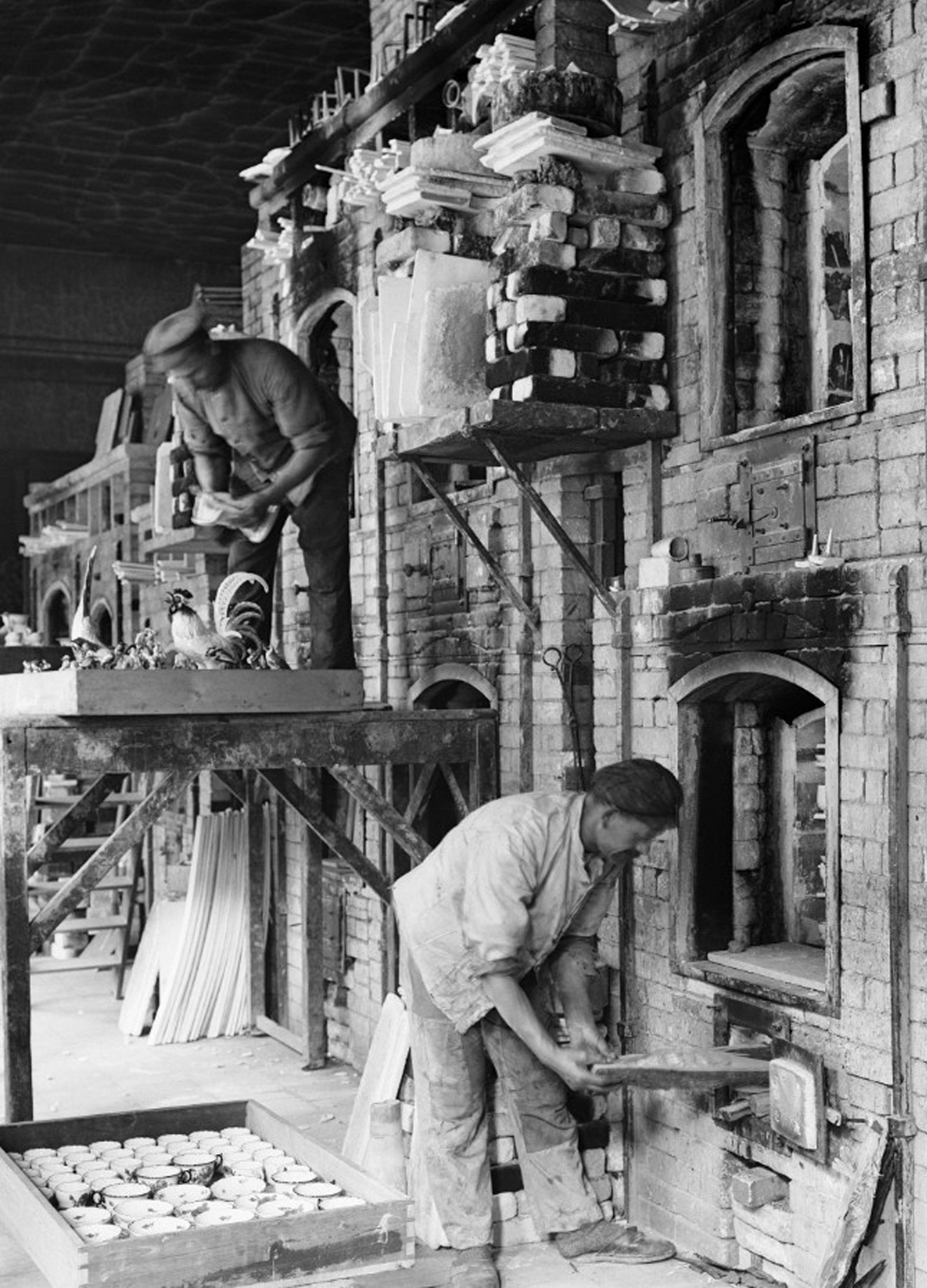
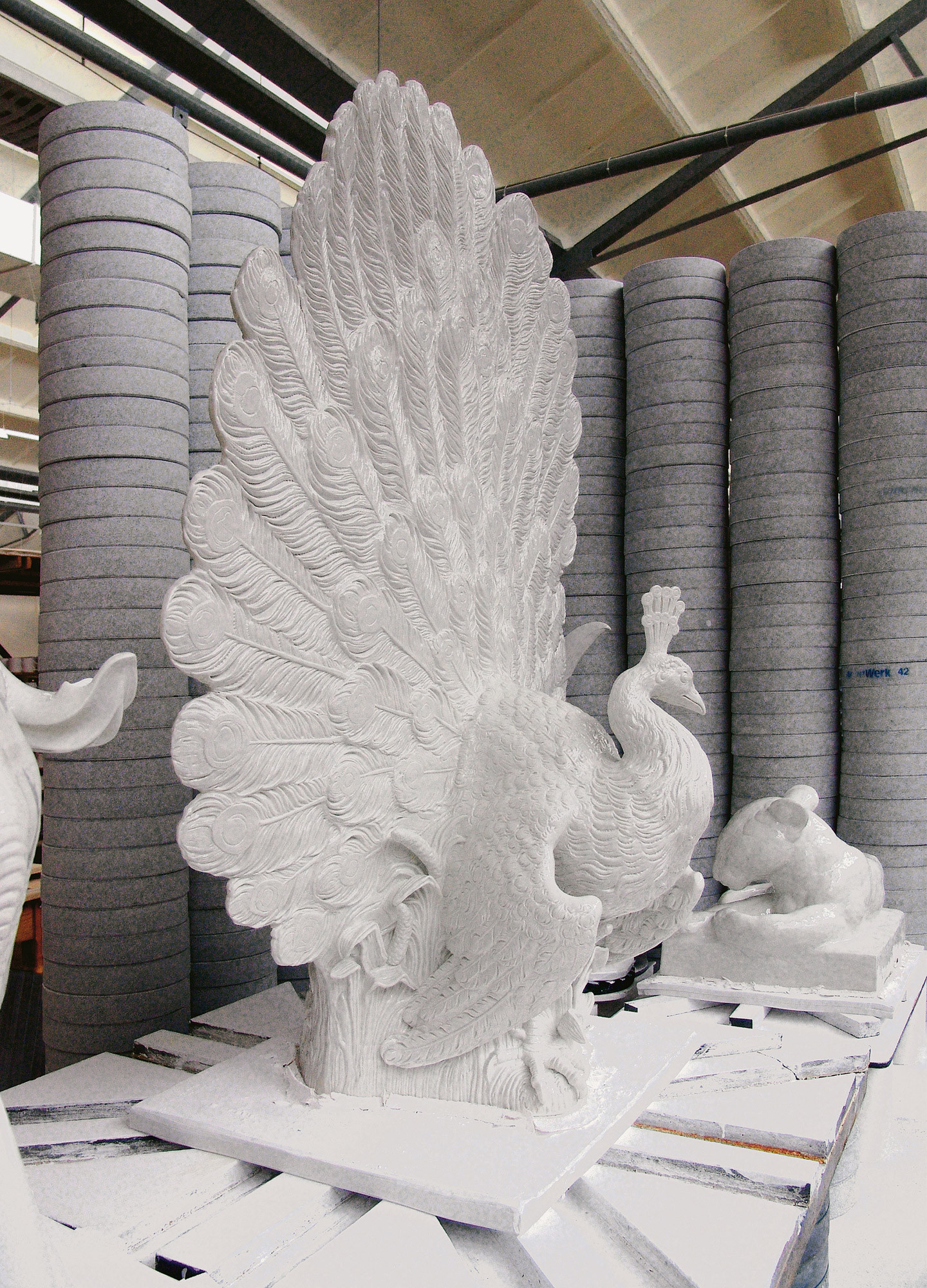
With these large-scale sculptures, the Meissen modelers not only enter entirely new artistic territory but also confront the manufactory with immense technical challenges. Producing life-sized porcelain figures was extremely difficult, as the material tended to crack or deform during firing, requiring precise modelling as well as strictly controlled drying and kiln temperatures.
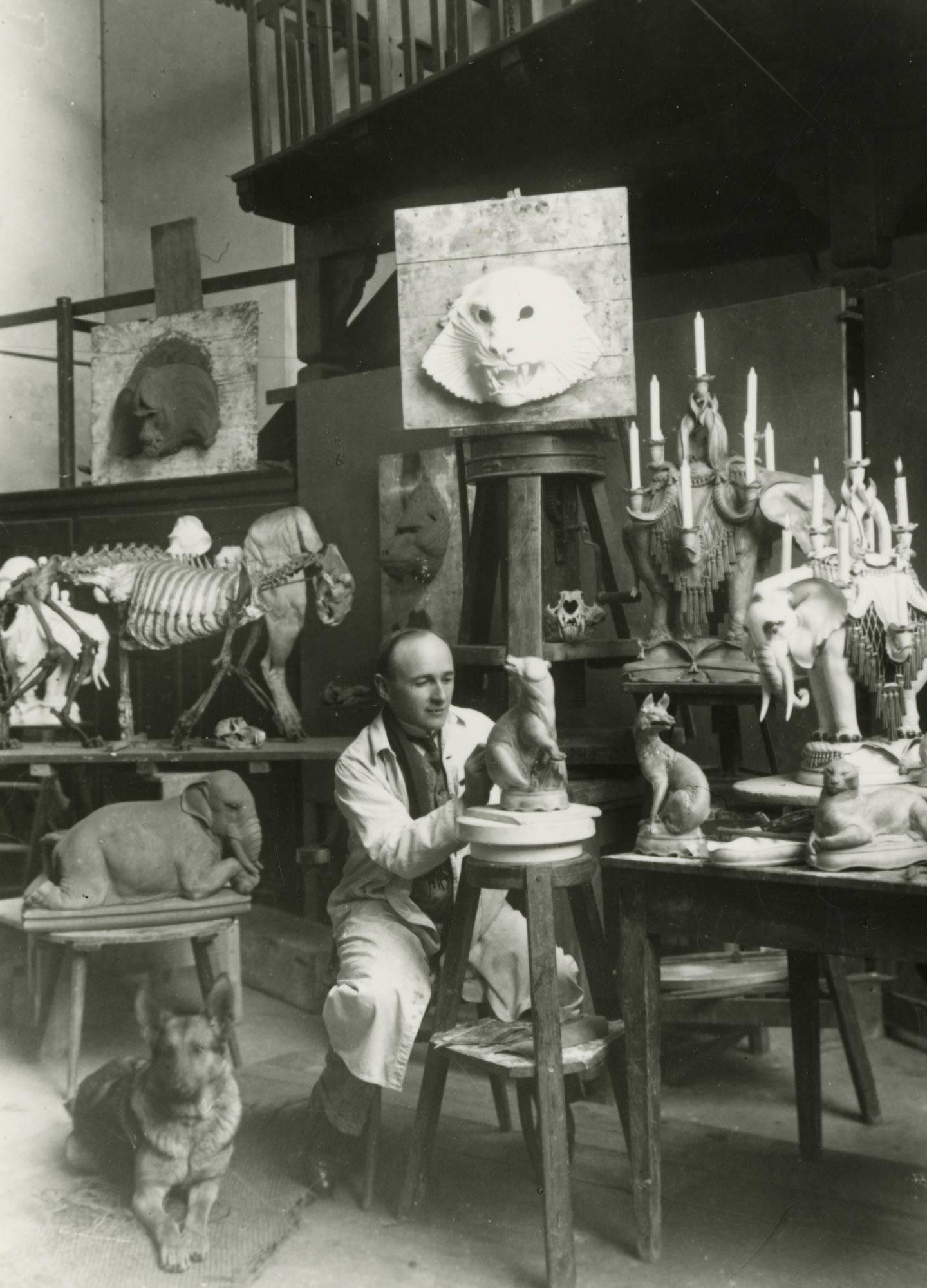
For their studies of animal anatomy and form, Kirchner and Kaendler made use of the court’s art and natural history cabinets, the bear and hunting lodges, and the wildlife enclosures at Moritzburg Hunting Lodge. Even the Bear Pit in Berlin served as a reference. The famous bear created by Kirchner, for example, was based on studies and models from these collections and was later exhibited as part of the porcelain foundation’s collection—an enduring testament to both creative imagination and technical mastery.
Even today, the creation of a life-sized animal sculpture is celebrated as a remarkable achievement. The realism and extraordinary level of detail achieved in these works remain unique at this scale.
In 1733, Augustus the Strong dies. Johann Gottlieb Kirchner leaves the manufactory, and in the same year Johann Joachim Kaendler is appointed model master of the MEISSEN porcelain manufactory.
-
1737Swan Service
This is an impressive testament to a brilliant era and is considered the opus magnum of German Baroque art: the “Swan Service” by Johann Joachim Kaendler.
In 1737, it was commissioned by Heinrich, Count von Brühl, First Minister under Augustus III. Five years later, this monumental service was completed—an ensemble of unprecedented scale and opulent sculptural richness. Designed for one hundred people, it comprises more than 2,200 individual pieces.
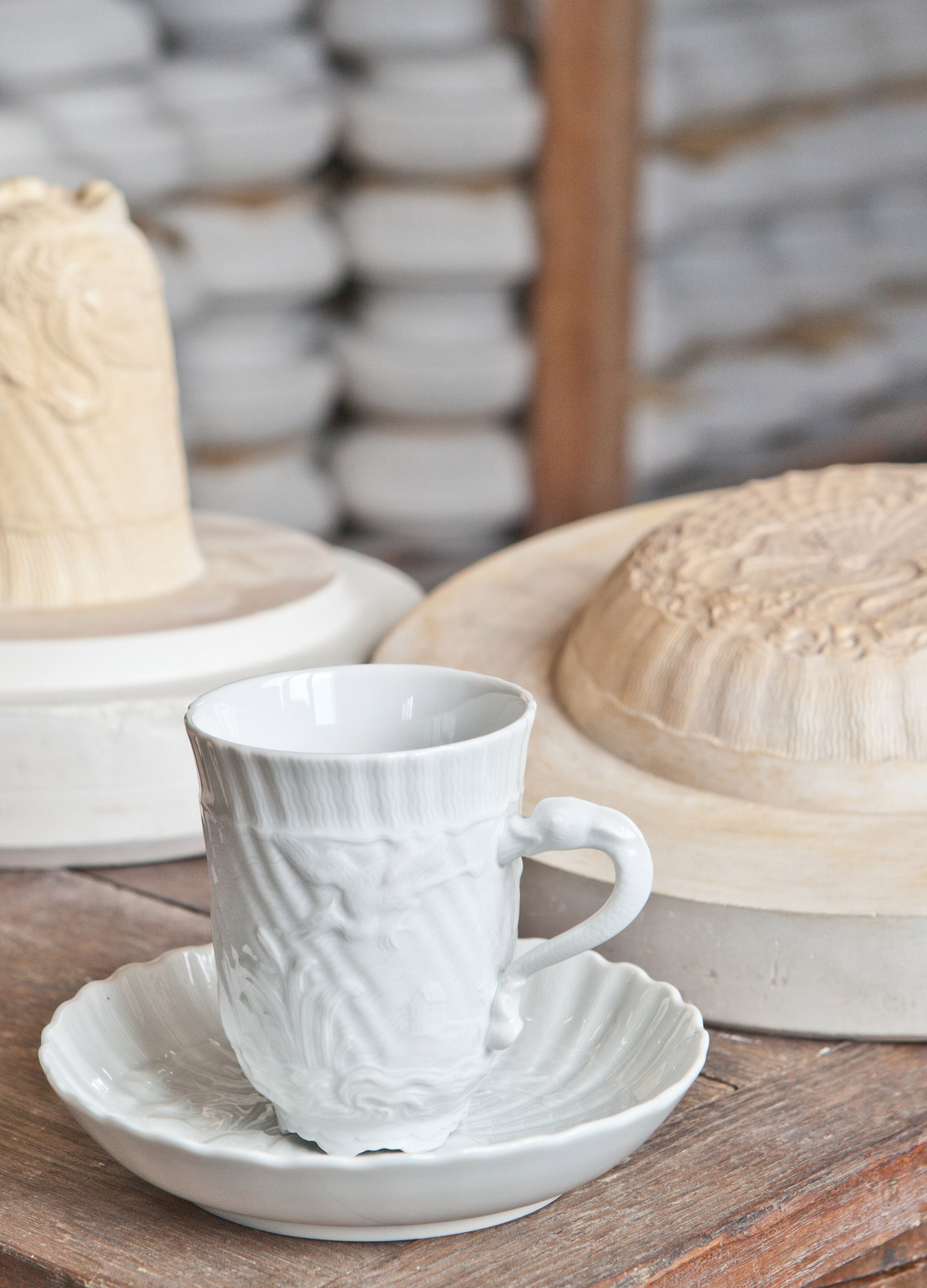
The central decorative motif is the swan, which appears in a variety of forms: as low-relief decoration, as fully sculpted figures, and even as vessels depicted in a swimming posture. Although this motif gives the service its name, the tableware is animated by numerous other figures drawn from Greek mythology.
The designs are based on drawings and copper engravings from the graphic collections of the nearby Dresden Academy of Fine Arts, as well as Meissen’s own holdings. Each piece becomes a variation on a mythological theme: Glaucus, Galatea and her retinue, sea nymphs, tritons, and dolphins—all of which reveal Kaendler’s mastery of porcelain as a medium for Baroque table sculpture.
The “Swan Service” impresses through its extraordinary variety of forms, lavish decoration, and sophisticated play of light and shadow—an ensemble that exceeds even the most ambitious expectations of its patron.
-
1739Royal Blossoms
Starting from the French court, a stylistic shift began to emerge across Europe in the 1730s. The focus was no longer on Asian-inspired fashion, but rather on a lavish European style that developed its own distinctive motifs.
At the MEISSEN porcelain manufactory as well, this led to new decorative designs and forms that moved away from East Asian models while aligning with the opulent aesthetic of the Rococo period. One of the most outstanding artistic achievements of this era is the “Royal Blossom” created by Johann Joachim Kaendler, who is still regarded as one of the most important modelers in the history of the MEISSEN manufactory.
In 1739, Kaendler, commissioned by Augustus III, created a service intended as a gesture of love from the king to his wife, Maria Josepha of Austria. Lavishly applied to cups, vases, and boxes, the floral decoration posed entirely new challenges for the modelers, painters, and kiln masters of what was then still a relatively young porcelain manufactory founded just three decades earlier. Each individual blossom was shaped by hand, applied to the respective object, and then painted separately.
With the “Royal Blossom” style, MEISSEN set both aesthetic and technical standards in porcelain design only thirty years after its founding—standards that would go on to become highly influential for other manufactories across Europe.
-
1748Opulent table centerpieces
Opulent festivities as expressions of power and grandeur define court life at the Saxon court of Augustus the Strong. Politics, economic strength, and cultural refinement are meant to be displayed in a striking and impressive manner. All the arts contribute to the staging of these events, and even the ruler and his guests become part of the performance: they dress as the seasons, the elements, the continents, or ancient deities.
This thematic approach is also reflected in porcelain design. Allegorical figures adorn the table settings of the period, adding emphasis to the art of dining and table decoration. The mythological elevation of Augustus the Strong is expressed through magnificent table centerpieces. Elegant porcelain figures—playful, coquettish, and often ambiguously suggestive—serve as catalysts for refined courtly conversation. The ultimate aim is always the dazzling display of absolute power.
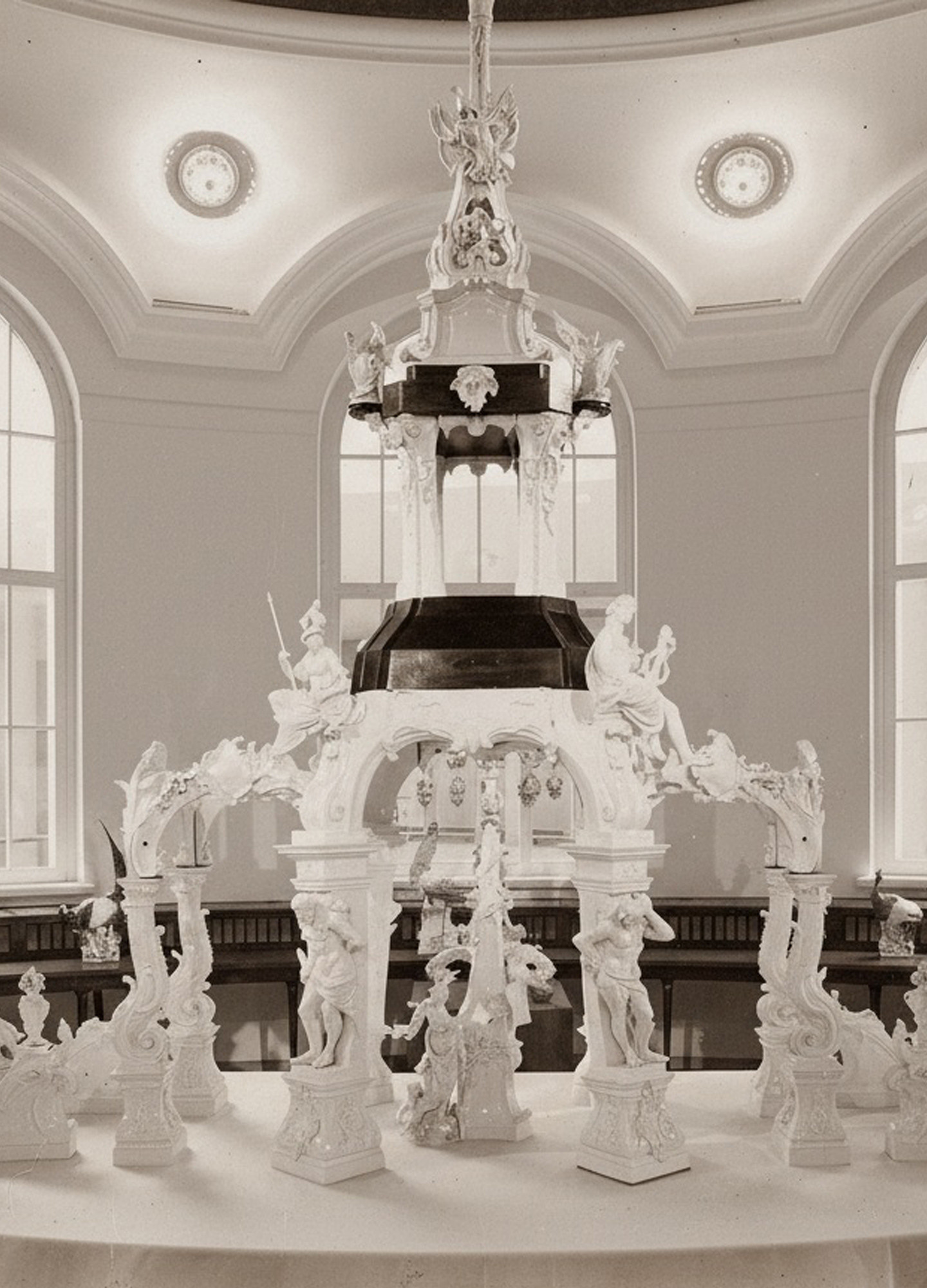
The most famous example of this is “The Great Temple of Honor” by Johann Joachim Kaendler from 1748. Designed in the form of a triumphal arch, the centerpiece consists of 123 individual parts and is the largest table centerpiece ever created in Meissen porcelain. The “Great Temple of Honor” was first used on March 5, 1749, for the name day of Frederick Augustus II, the son of Augustus the Strong.
-
18th centuryMythology
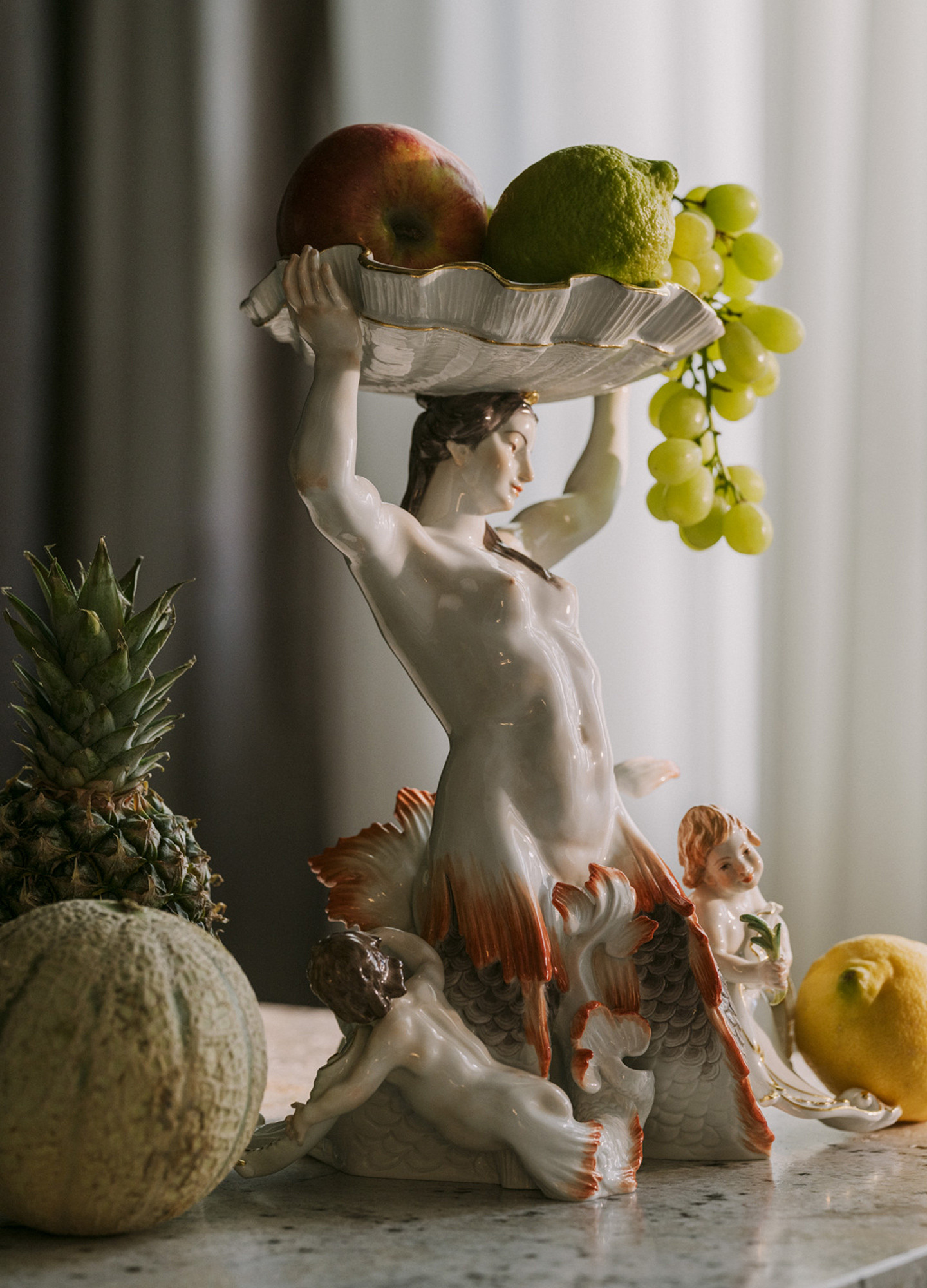
Since the 1730s, Meissen artists have drawn on ancient mythology as a rich source of inspiration for their work. Whether female figures as muses, exuberant genii embodying the arts, or a baroque triton within Johann Joachim Kaendler’s monumental “Swan Service”—in these sculptural and decorative porcelain works, the imagination and masterful craftsmanship of Meissen artisans of the period are vividly expressed.
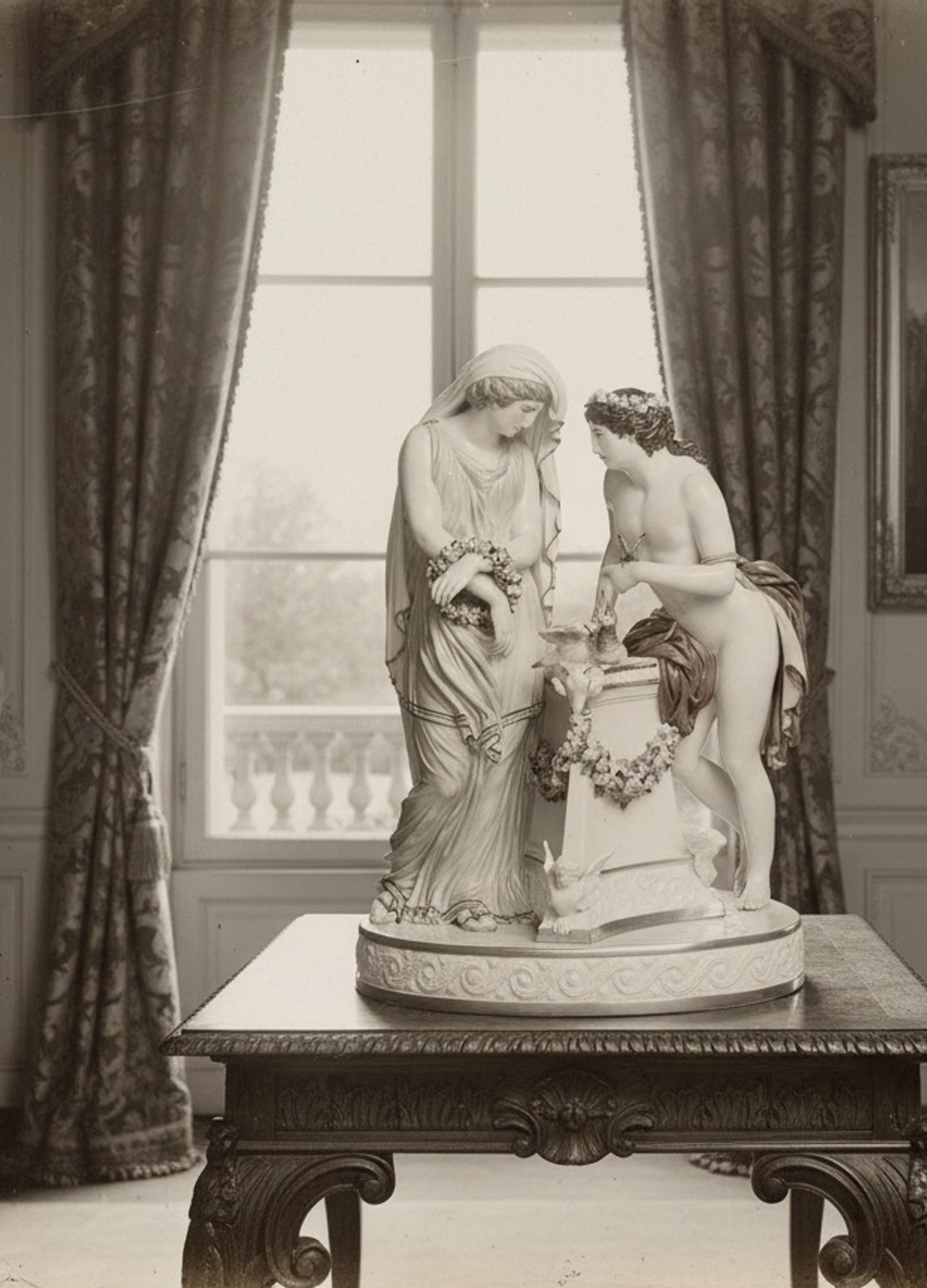
During the Neoclassical era, antiquity even becomes a binding aesthetic ideal: ornaments and decorative motifs are consciously modeled on the architectural language of the ancient world. MEISSEN dedicates itself both to the design of complete services and to the creation of decorative elements such as friezes, festoons, and garlands. A decisive influence in this regard is Johann Joachim Winckelmann’s interpretation of antiquity. As visual references, the manufactory draws on ancient sculptures from the Royal Collection in the Japanese Palace and in the East Hall of the Stallhof in Dresden.
-
1764In search of style
The Seven Years’ War (1756–1763) marks the end of Meissen’s first golden age. The hardships and shortages associated with the conflict even threaten the very survival of the manufactory.
At the same time, Humanism and the Enlightenment give rise across Europe to new, increasingly bourgeois value systems. Originating in France, a new artistic style—Neoclassicism—spreads throughout Europe, reflecting a renewed fascination with the ancient world, fueled by archaeological discoveries in Herculaneum and Pompeii.
In 1764, the French modeler Michel Victor Acier arrives in Meissen to introduce new artistic impulses in the spirit of the age. Like few others, he shapes the Marcolini period of the manufactory, named after Count Marcolini, who becomes director in 1774.
During this era, a strict adherence to architectural and ornamental forms derived from antiquity gradually replaces the colorful exuberance of the Baroque in favor of a more restrained aesthetic, including camaïeu, monochrome tonal painting, and pâte-sur-pâte decoration. At times, even the application of glaze is omitted altogether.
With the deaths of Höroldt and Kaendler in 1775, the work of two of the most significant artists in Meissen’s history comes to an end. They laid the foundation for all subsequent artistic development at the manufactory.
-
1806The Royal Saxon Porcelain Manufactory
With the establishment of the Kingdom of Saxony, the manufactory operates from 1806 onward under the name “Royal Saxon Porcelain Manufactory.” In 1814, mining official Carl Wilhelm von Oppel is appointed as the new director, succeeding Count Marcolini. He initiates essential changes in artistic, technical, and organizational matters.
With the appointment of Heinrich Gottlob Kühn to Meissen, the manufactory gains a technical inspector to whom the most important innovations of this period are attributed. As early as 1817, Kühn develops the new underglaze color chromium oxide green, with which Johann Samuel Arnold creates the popular “Full Green Vine Wreath” decoration.
During his tenure, Kühn also introduces the round kiln and, in 1827, invents so-called “bright gold”—a gilding technique that, unlike burnished gold, requires no polishing after firing. This innovation makes it possible for the first time to fully gild even highly detailed relief decorations.
From 1831 onward, the manufactory is placed under the supervision of the Royal Ministry of Finance as its governing authority.
-
19th centuryIndustrialisation
With industrialization in the mid-19th century, the purchasing power of the bourgeoisie increases significantly. Porcelain, which in the previous century had been reserved exclusively for the nobility, now becomes accessible to broader segments of society. As demand for Meissen porcelain grows, so too does the need for new forms and decorative designs that meet the representational aspirations of the affluent bourgeoisie.
A key figure of this period is Ernst August Leuteritz, who leads the manufactory’s design department from 1849 to 1886. Under his direction, Meissen modelers and porcelain painters draw from the manufactory’s rich formal vocabulary in highly individual ways. Their new shapes and decorations reference earlier stylistic periods while simultaneously offering independent interpretations. During this era of Historicism, numerous porcelain pieces are created in a wide variety of historical styles.
Magnificent vases, vessels, and figures designed by Ernst August Leuteritz and exhibited at world fairs bring the manufactory international recognition and acclaim. From this period, Leuteritz emerges as one of the new classics in Meissen’s history.
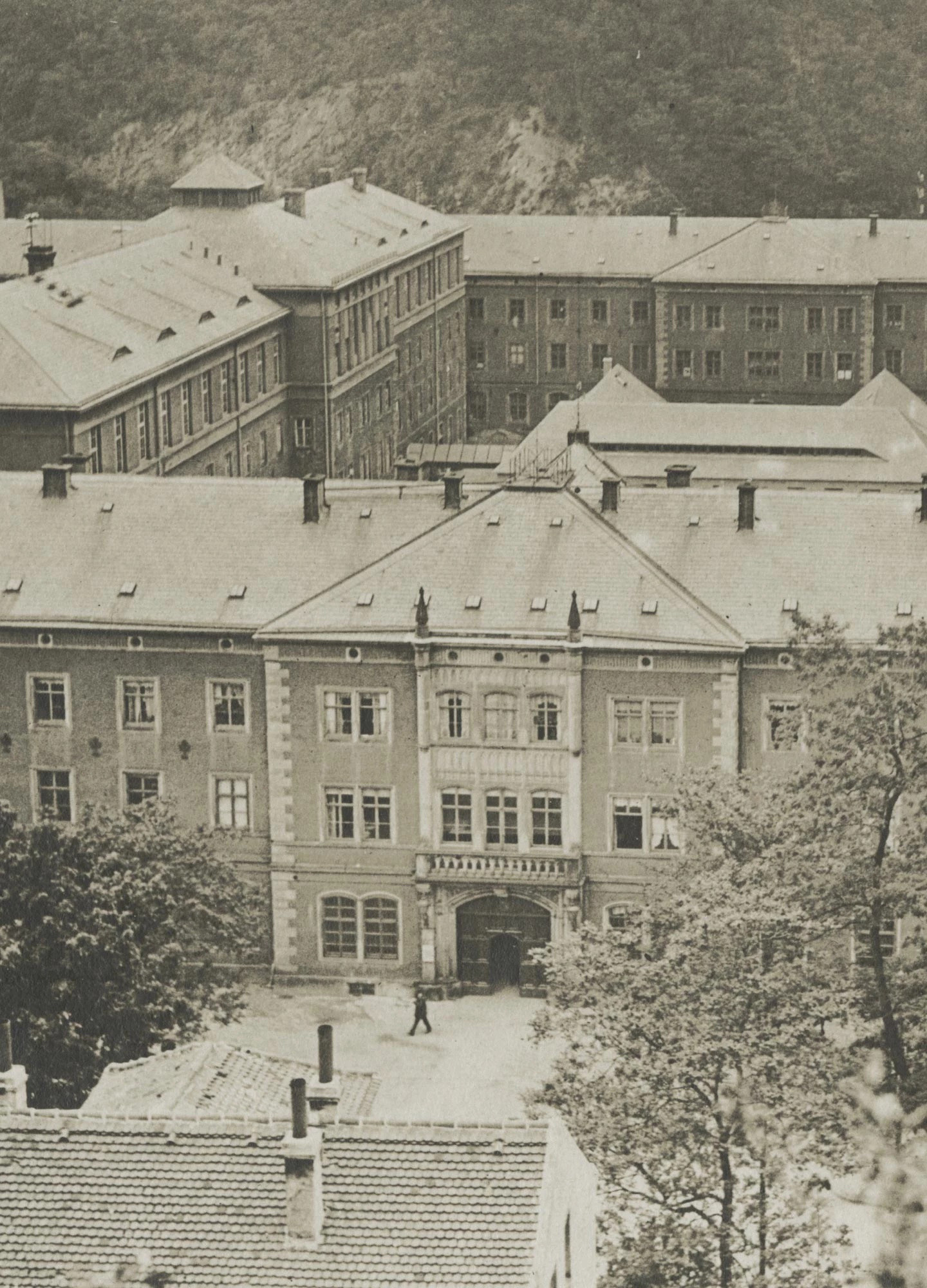
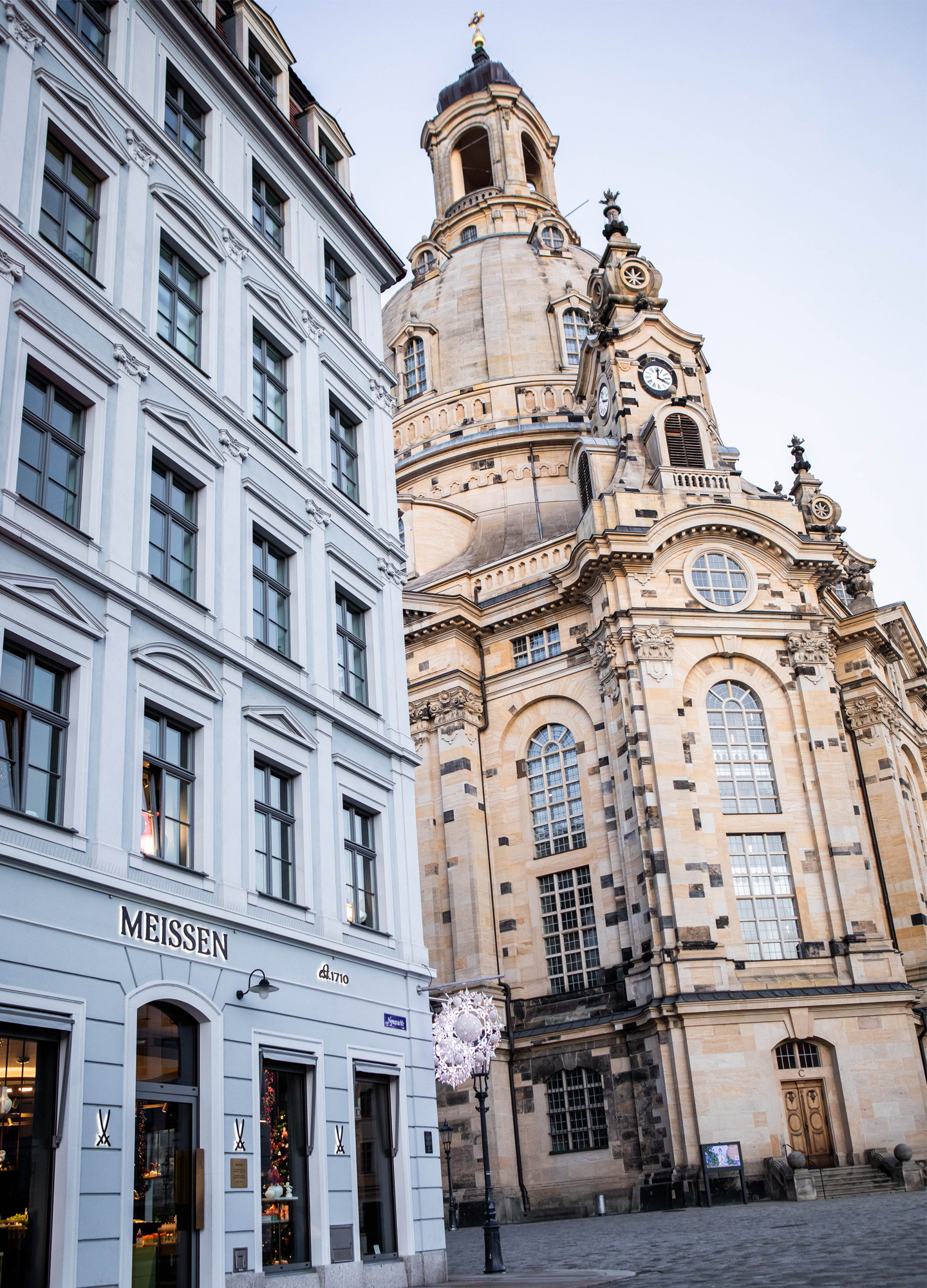
As early as 1863, production at Albrechtsburg Castle is discontinued, as the distances are too great and the conditions unsuitable for a modern industrial manufactory. Between 1861 and 1864, a new production facility is built in the Triebisch Valley, which remains the current site of the MEISSEN porcelain manufactory to this day.
-
1907A new self-image
In the 19th century, the work of the MEISSEN porcelain manufactory is characterized by the technically and craft-perfect reproduction of art-historical models. Original, creative artistic expression plays only a minor role in porcelain design during this period.
Following the major world exhibitions in London in 1851 and Paris in 1867, this backward-looking orientation of the manufactory comes under sharp criticism and sparks intense debate about its artistic future. Many progressive artists of the time seek a way out of the conservative academic art world—a path they ultimately find in the early 20th century. Young artists and manufactory employees begin to explore new aesthetic possibilities for porcelain with an open mind, paving innovative directions for its design. In this way, a form of porcelain art emerges that reflects the modern spirit of the age. Examples include the “Hentschel Children” by Julius Konrad Hentschel and the “Ball Player” by Walter Schrott.
In 1907, the Dresden “Procession of Princes,” a unique mural of Saxon history, is officially unveiled. The installation consists of 25,000 hand-painted porcelain tiles from Meissen and is considered the largest ceramic mural in the world. The production of the tiles took place between 1904 and 1907, with each tile measuring 20.5 × 20.5 cm.
In 1916, the exhibition hall attached to the manufactory in the Triebisch Valley is opened as a model collection and museum for Meissen porcelain.
-
1918The 1920s
After the end of the First World War (1914–1918) and the fall of the German monarchy in 1918 during the November Revolution, the Meissen porcelain manufactory was nationalized and renamed the State Porcelain Manufactory Meissen. In the same year, Max Adolf Pfeiffer was appointed director. Under his leadership, the artistic output of MEISSEN reached a level comparable to its first golden age in the 18th century.
Pfeiffer engaged outstanding artists such as Paul Scheurich, Max Esser, Ernst Barlach, and Gerhard Marcks, who opened up new expressive possibilities for porcelain. Contemporary figures, vessels, and decorative works were created that referenced the great creations of Johann Joachim Kaendler in the 18th century, while at the same time setting new standards for porcelain art in the 20th century.
In 1919, the term “Böttger stoneware” was re-established and officially registered in the trademark register of the Berlin Patent Office.
On the occasion of the 200th anniversary of Augustus the Strong’s death, a new edition of the “Temple of Honor” was created in 1933. This monumental table centerpiece was reconstructed using preserved original molds from 1748 and was further supplemented.
-
1933 - 1945MEISSEN during National Socialism
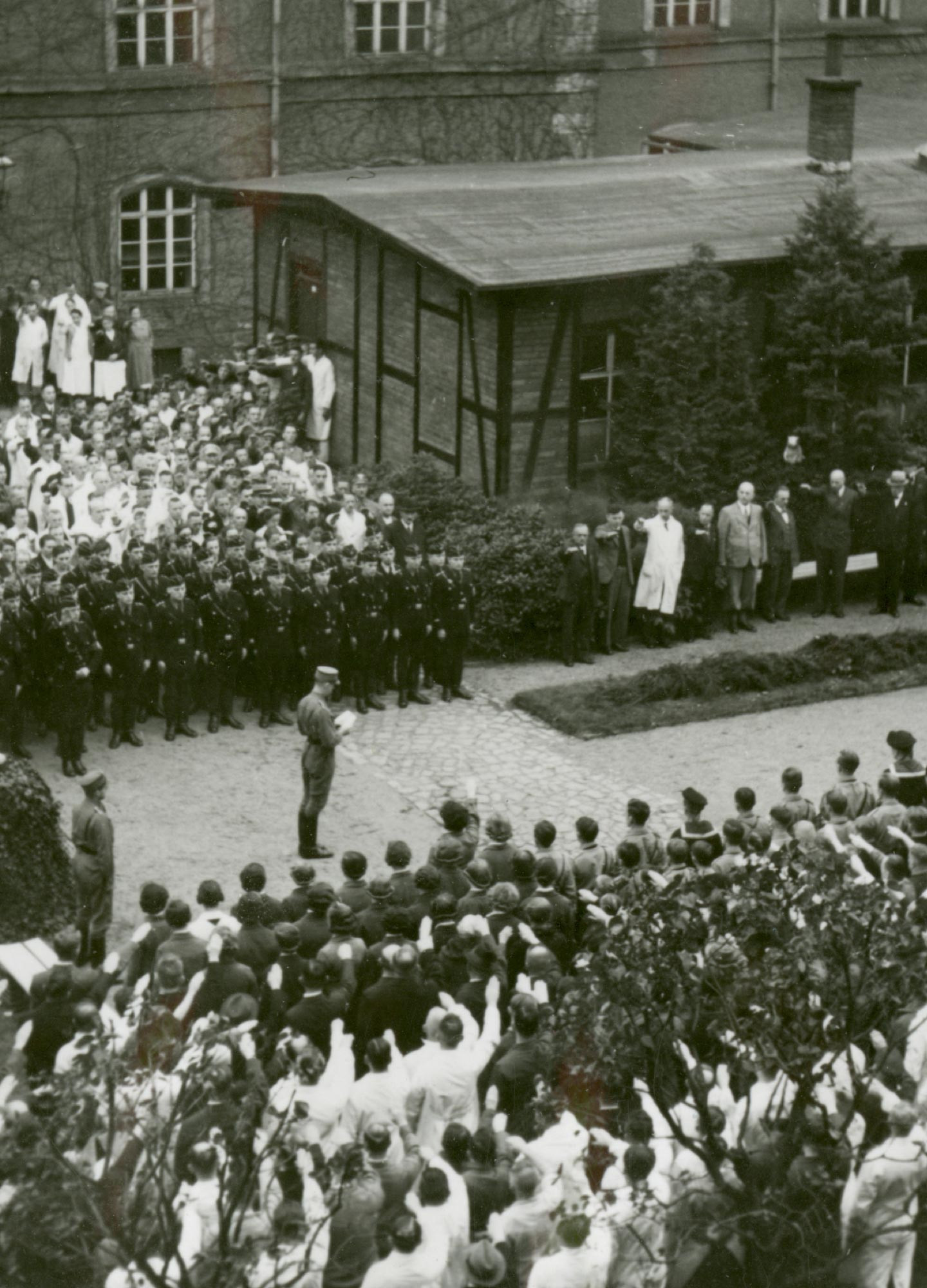
A scholarly reassessment of the period of National Socialism at the manufactory has not yet been comprehensively documented. However, a review of the archival records reveals the manufactory’s ambivalent position: a works assembly on October 2, 1941, declared the goal of becoming a model enterprise under National Socialist principles. Orders for dinner services, busts, medals, and sculptural works placed by high-ranking party and military officials, as well as by ministers and diplomats, reflect this alignment.
In 1942/43, a new department for chemical and technical porcelain was established, and the manufactory also took on armaments-related contracts. This allowed it to continue operating throughout the war and, in some cases, to protect employees from being deployed to the front. Overall, porcelain production during the Second World War was severely hindered by shortages of materials and personnel. In 1945, production came to a complete standstill.
After the end of the war, between June and September 1945, several production facilities were dismantled by the Soviet Military Administration. Under director Herbert Neuhaus, production resumed with approximately 200 employees, including 50 painters and 30 designers. As early as spring 1946, Meissen porcelain was once again presented at the first post-war Leipzig trade fair.
On August 1, 1946, the manufactory was transferred to the Soviet joint-stock company “Zement” in accordance with German reparations obligations. As late as 1950, it operated under the name “State Joint-Stock Company for Building Materials ‘Zement’ – Porcelain Manufactory Meissen.” The transfer from Soviet ownership to the German Democratic Republic took place on July 1, 1950. Subsequently, the manufactory became a state-owned enterprise under the name “VEB State Porcelain Manufactory Meissen,” and Waldemar Wüstenmann was appointed director in 1950.
-
1960sCollectively Artistic Development
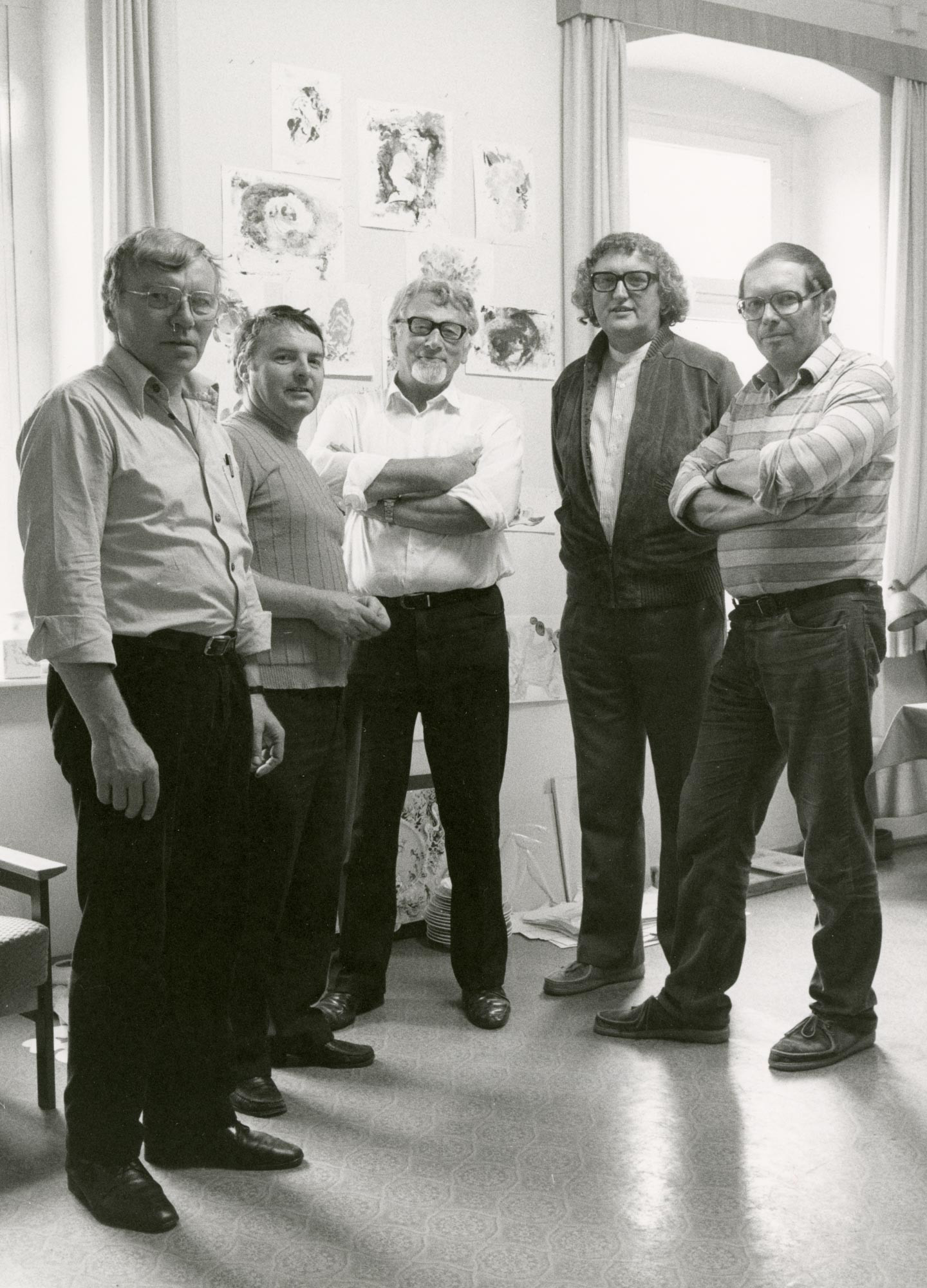
In the 1960s, the artist group “Collective for Artistic Development” is founded, significantly shaping the visual identity of contemporary Meissen porcelain. Key representatives include the designer Ludwig Zepner, the sculptor Peter Strang, and the painters Heinz Werner, Rudi Stolle, and Volkmar Brettschneider.
At the beginning of the 1970s, Ludwig Zepner creates the service form “Large Cutout.” In the years that follow, new decorative designs in a wide variety of painting techniques are developed almost annually for this service ensemble. A highlight of this development is the decoration “One Thousand and One Nights” by Heinz Werner. In it, he stages a dynamic, narrative miniature painting filled with imagination, inspired by the world of Oriental fairy tales.
In 1969, Karl Petermann is appointed director of the porcelain manufactory. He places particular emphasis on combining traditional porcelain artistry with free, creative artistic expression. Under his leadership, the manufactory develops into an important source of foreign currency for the GDR.
By the late 1970s, the so-called “studio porcelains” emerge—unique pieces in which artists are able to realize their own individual design concepts.
-
1990 - 2008Meissen after reunification
On June 26, 1991, the former state-owned enterprise (VEB) was transformed into “Staatliche Porzellan-Manufaktur Meissen GmbH.” To this day, the Free State of Saxony remains the sole shareholder of the manufactory.
In 1992, a new generation of artists takes up the legacy of the “Collective for Artistic Development,” including Jörg Danielczyk, Silvia Klöde, Sabine Wachs, Gudrun Gaube, Olaf Fieber, and Andreas Herten.
Under designer Sabine Wachs, the new service form “Wave Play” is created in 1996 after three years of artistic development work, marking MEISSEN’s design transition into the new millennium.
In the early years following reunification, the manufactory was able to continue its business operations without major disruptions, with much of its workforce and management structure from the pre-unification period remaining in place. In the years that followed, however, the European and German porcelain industry was affected by a significant downturn: between 1991 and 2007, the number of employees in Germany fell from approximately 27,000 to around 6,000.
The manufactory, whose corporate culture had been strongly shaped by the centrally planned economic system of the former GDR, initially struggled to adapt to the demands of a market-oriented economy.
This wishlist name is already present.